- Authority belongs to Allah’s Book. The Prophet is presented here as a warner and conveyor of what is revealed (see 11:12–14). Treat anything outside the Qur’an as non-binding unless the Qur’an itself establishes it.
- Scholars are not revelation. When sheikhs/imams claim extra “divine law” not in the Qur’an, it often becomes a tool of control, division, and blind following. The Qur’an warns against taking religious authorities as lords and against legislating in religion without Allah (e.g., 9:31, 42:21).
- Measure every claim. If someone says “Islam says…” ask: Where is it in the Qur’an? Do not follow conjecture (10:36) or speak without knowledge (17:36).
11:1Alif. Lam. Ra. (This is) a Book, the verses whereof are perfected, then explained in detail, from one who is All Wise, Well Informed.
11:2That you do not worship except Allah. Indeed, I am to you from Him a warner and a bringer of good tidings.
11:3And that you seek forgiveness of your Lord, then you turn to Him in repentance. He will let you enjoy a fair provision for a term appointed. And He will bestow His bounty on everyone who merits favor. And if you turn away, then indeed, I fear for you the punishment of a great Day.
11:4Unto Allah is your return. And He is Able to do all things.
11:5Behold, indeed they fold up their breasts, that they may hide from Him. Behold, (even) when they cover themselves with their garments, He (Allah) knows what they conceal and what they proclaim. Indeed, He is the All Knower of what is (secret) in the breasts.
11:6And there is no living creature on the earth but that upon Allah is its provision. And He knows its definite abode and its temporary deposit. All is in a clear Book.
11:7And it is He who created the heavens and the earth in six days, and His Throne was upon the water, that He might test you, which of you is best in deed. And if you (O Muhammad) were to say: “Indeed, you shall be raised up after death.” Those who disbelieve will surely say: “This is not but an obvious magic.”
11:8And if We delay from them the punishment until a determined period, they will surely say: “What withholds it.” Behold, on the day it comes to them, it will not be averted from them, and will surround them that which they used to mock at.
11:9And if We give man a taste of mercy from Us, and then We withdraw it from him. Indeed, he is despairing, ungrateful.
11:10And if We let him taste of favor after harm has touched him, he is sure to say: “The ills have gone from me.” Indeed, he is exultant, boastful.
11:11Except those who are patient and do righteous deeds. Those, theirs will be forgiveness and a great reward.
11:12Then (O Muhammad), would you possibly give up some of what is revealed to you, and your breast feels straitened by it, because they say: “Why has not been sent down to him a treasure, or come with him an angel.” You are only a warner. And Allah is Trustee over all things.
11:13Or do they say: “He (Muhammad) has invented it (Quran).” Say: “Then bring ten surahs like unto it, invented, and call upon whomever you can other than Allah, if you are truthful.”
11:14“Then if they (your false gods) answer you not, then know that this (revelation) is sent down with the knowledge of Allah, and that there is no god except Him. Would you then be (of) those who surrender.”
11:15Whoever desires the life of the world and its adornments, We shall pay in full to them (the wages) for their deeds therein. And they will have no diminution therein.
11:16They are those for whom there is nothing in the Hereafter, except Fire. And lost is what they did therein, and worthless is that which they used to do.
11:17Can then he be (like) him who is upon a clear proof from his Lord. And a witness from Him recites it. And before it was the Book of Moses, a guidance and a mercy. They believe therein. And whoever disbelieves in it among the factions, then the Fire will be his promised destination. So be not you in doubt about it. Indeed, it is the truth from your Lord, but most of mankind do not believe.
11:18And who is more unjust than he who invents a lie about Allah. Those will be brought before their Lord, and the witnesses will say: “These are they who lied against their Lord.” Behold, the curse of Allah is upon the wrong doers.
11:19Those who hinder (others) from the path of Allah, and seek a crookedness therein. And they are disbelievers in the Hereafter.
11:20They will not be able to escape (from Allah's punishment) on the earth, nor are there for them, other than Allah, any protecting friends. The punishment will be doubled for them. They were not able to hear, nor did they see.
11:21They are those who have lost their own selves, and has vanished from them that which they used to invent.
11:22Without a doubt, they are those who, in the Hereafter, will be the greatest losers.
11:23Certainly, those who believe and do righteous deeds and humble themselves before their Lord. They will be the companions of the Garden. They will abide therein forever.
11:24The similitude of the two parties is as the blind and the deaf and the seer and the hearer. Are they equal in similitude. Will you not then take heed.
Qur'an-Only Explanation (Key Points)
- Verses 1–2 establish the core: the Qur’an is a perfected, explained Book; worship is due to Allah alone.
- Repentance is practical: seek forgiveness, then return to Allah—this leads to provision in time and accountability in the end.
- The text exposes inner concealment: people can hide from humans, but not from Allah (5–6).
- A recurring pattern is named: when mercy is removed people despair; when ease returns people boast (9–11).
- The Prophet is presented as a warner (12). The Qur’an challenges fabrications: bring ten surahs like it (13–14).
- Worldly payoff can happen even for those aiming at this life only, but the Hereafter is the real audit (15–16).
- Two parties are contrasted: those who lie about Allah and block His path vs. those who believe and humble themselves (18–24).
Cross-check verses: Related Qur’an checkpoints: 6:112–116, 7:3, 10:36, 17:36, 42:21.
11:25And indeed, We sent Noah to his people (he said): “Surely, I am a plain warner to you.”
11:26That you worship none, but Allah. Surely, I fear for you, the punishment of a painful day.
11:27So the chiefs, who disbelieved among his people, said: “We do not see you but a mortal like ourselves, nor do we see you being followed except by those who are the lowest of us, immature in judgment. And we do not see in you any merit above us, in fact we think you as liars.”
11:28He said: “O my people, see you, if I should be upon a clear evidence from my Lord, and He has given me a mercy from Himself, and it has been made obscure to you. Shall we force it upon you while you have a hatred for it.”
11:29“And O my people, I ask of you no wealth for it. My recompense is not but with Allah, and I am not going to drive away those who have believed. Indeed, they will meet their Lord. But I see you a people that are ignorant.”
11:30“And O my people, who will help me against Allah if I drove them away. Then will you not give a thought.”
11:31“And I do not say to you that with me are the treasures of Allah, nor do I have knowledge of the unseen, nor do I say that I am an angel, nor do I say of those whom your eyes look down upon that Allah will never grant them any good. Allah knows best of what is in their souls. Indeed, I would then be among the wrong doers.”
11:32They said: “O Noah, surely, you have disputed with us, then much have you prolonged the dispute with us, so bring upon us that with which you threaten us, if you are of the truthful.”

11:33He said: “Only Allah will bring it upon you if He wills, and you will not escape.”
11:34“And my advice will not benefit you, even if I wish to advise you, if Allah should intend to keep you astray. He is your Lord, and to Him you will be returned.”
11:35Or do they say: “He (Muhammad) has invented it (Quran).” Say: “If I have invented it, then upon me will be my crimes, and I am innocent of what (crimes) you commit.”
11:36And it was revealed to Noah that: “No one will believe from your people except those who have believed already. So be not distressed because of what they have been doing.”
11:37“And build the ship under Our eyes and Our inspiration, and do not address Me on behalf of those who have wronged. Surely, they will be drowned.”
11:38And he built the ship, and whenever the chiefs of his people passed by him, they made a mockery of him. He said: “If you mock at us, so do we indeed mock at you, likewise of your mocking.”

11:39“Then soon you will know who it is to whom will come a punishment that will disgrace him, and upon whom will fall a lasting punishment.”
11:40Until when Our command came to pass and the oven gushed forth (with water). We said: “Embark therein, of each kind two (male and female), and your household, except him against whom the word has gone forth already, and those who believe.” And none believed with him, except a few.
11:41And he (Noah) said: “Embark therein. In the name of Allah is its moving course and its resting anchorage. Surely, my Lord is Oft Forgiving, Most Merciful.”
11:42And it sailed with them amidst waves like mountains, and Noah called out to his son, and he was at a distance (from the rest): “O my son, come ride with us, and do not be with the disbelievers.”
11:43He (son) said: “I shall take refuge on a mountain, it will save me from the water.” He (Noah) said: “This day there is none that saves from the decree of Allah except him on whom He has mercy.” And a wave came in between them, so he was among those who were drowned.

11:44And it was said: “O earth, swallow up your water, and O sky, withhold (rain).” And the water was made to subside. And the decree was fulfilled. And it (the ship) came to rest upon (the mount) Al-Judi, and it was said: “A far removal for wrong doing people.”
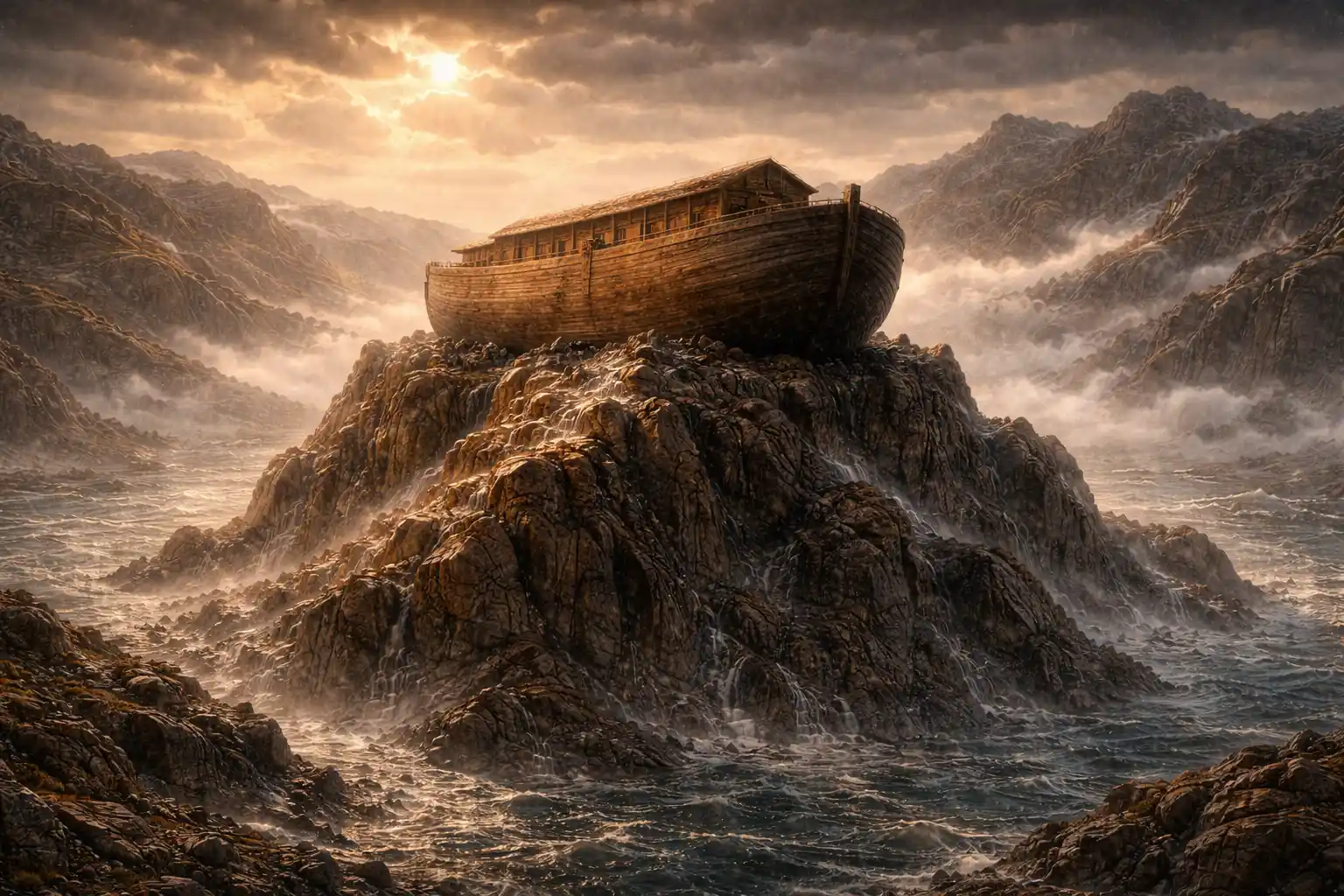
11:45And Noah called upon his Lord, so he said: “My Lord, surely, my son is of my household. And surely, Your promise is true, and You are the Most Just of Judges.”
11:46He (Allah) said: “O Noah, indeed, he is not of your household. Indeed, his conduct was unrighteous. So ask Me not for that of which you have no knowledge. Indeed, I advise you, lest you be among the ignorant.”
11:47He (Noah) said: “My Lord, indeed, I seek refuge with You, that I should ask You that of which I have no knowledge. And unless You forgive me and have mercy upon me, I would indeed be among the losers.”
11:48It was said: “O Noah, disembark with peace from Us, and blessings on you and on nations (descending) from those with you. And (there will be other) nations to whom We shall give enjoyment a while, then a painful punishment from Us will reach them.”
11:49That is of the news of the unseen which We have revealed to you (Muhammad). You knew it not, (neither) you, nor your people before this. So have patience. Indeed, the (good) end is for those who fear (Allah).
Qur'an-Only Explanation (Key Points)
- Nūḥ’s message is simple and consistent: worship Allah alone and face the Day honestly (25–26).
- Elites attack the messenger’s humanity and the social status of followers—an old tactic to protect privilege (27).
- Nūḥ rejects monetizing guidance (29) and refuses to ‘purge’ believers to please leaders (30).
- He clarifies his limits: no treasure claims, no unseen claims, no angel claims—only the conveyed warning (31).
- When mocked, Nūḥ keeps building under Allah’s direction; outcomes are determined by Allah’s command, not popular opinion (37–41).
- The story corrects ‘family’ as a spiritual category: blood relation does not override wrongdoing (45–46).
- The Prophet Muhammad is told this is unseen news revealed to him—this reinforces revelation as the source of knowledge (49).
Cross-check verses: Related Qur’an checkpoints: 11:49, 12:108, 39:18, 7:3.
11:50And to (the tribe of) A'ad (We sent) their brother, Houd. He said: “O my people, worship Allah. You have no god other than Him. You are not but inventors (of lies).”
11:51“O my people, I ask you of no reward for it. My reward is not except from Him who created me. Will you then not understand.”

11:52“And O my people, ask forgiveness of your Lord, then turn to Him (in repentance). He will send (from) the sky upon you abundant rain, and will add unto you strength to your strength. And do not turn away as criminals.”
11:53They said: “O Houd, you have not brought us clear evidence, and we shall not leave our gods on your (mere) saying, and we are not believers in you.”
11:54“We say nothing but that some of our gods have possessed you with evil.” He said: “Indeed, I take Allah as witness, and you (too) bear witness that I am free from that which you ascribe as partners (to Allah).”
11:55“Other than Him. So plot against me all together, then give me no respite.”
11:56“Indeed, I have put my trust in Allah, my Lord and your Lord. There is not of a moving creature but He has grasp of its forelock. Indeed, My Lord is on the straight path.”
11:57“So if you turn away, then indeed, I have conveyed to you that which I have been sent with to you. And my Lord will replace you with people other than yourselves. And you will not harm Him at all. Indeed, my Lord is Guardian over all things.”
11:58And when Our command came, We saved Houd and those who believed with him by a mercy from Us. And We saved them from a severe punishment.
11:59And such were A'ad.They rejected the signs of their Lord, and disobeyed His messengers, and followed the command of every obstinate tyrant.
11:60And they were followed in this world with a curse and on the Day of Resurrection. Behold, indeed A'ad disbelieved in their Lord. Behold, a far removal for A'ad, the people of Houd.
Qur'an-Only Explanation (Key Points)
- Hūd confronts ʿĀd’s idolatry and fabricated religion (50).
- He refuses payment and appeals to reason: the Creator deserves obedience (51).
- Repentance is linked to tangible social blessing (rain/strength) (52).
- When accused of being ‘possessed’, Hūd responds with clarity: he is free from their partners and trusts Allah (54–56).
- If they reject, Allah can replace them; Allah’s guardianship cannot be harmed (57).
- The end is summarized: rejection of signs + following tyrants leads to curse here and in the Hereafter (59–60).
Cross-check verses: Related Qur’an checkpoints: 2:170, 5:104, 6:116, 42:21.
11:61And to (the tribe of) Thamud (We sent) their brother Salih. He said: “O my people, worship Allah. You have no god other than Him. It is He who has brought you forth from the earth, and has settled you therein. So ask forgiveness of Him, then turn to Him (in repentance). Indeed, my Lord is Near, Responsive.”

11:62They said: “O Salih, indeed you have been among us as a figure of hope before this. Do you (now) forbid us to worship of what our forefathers have worshipped. And indeed, we are really in grave doubt about that to which you invite us.”
11:63He said: “O my people, do you see, if I am upon a clear evidence from my Lord, and there has come to me a mercy from Him, then who will save me from Allah if I disobeyed Him. So you would not increase me but in loss.”
11:64“And O my people, this is the she-camel of Allah, a sign to you, so let her pasture on Allah's earth, and do not touch her with harm, lest a near punishment should seize you.”
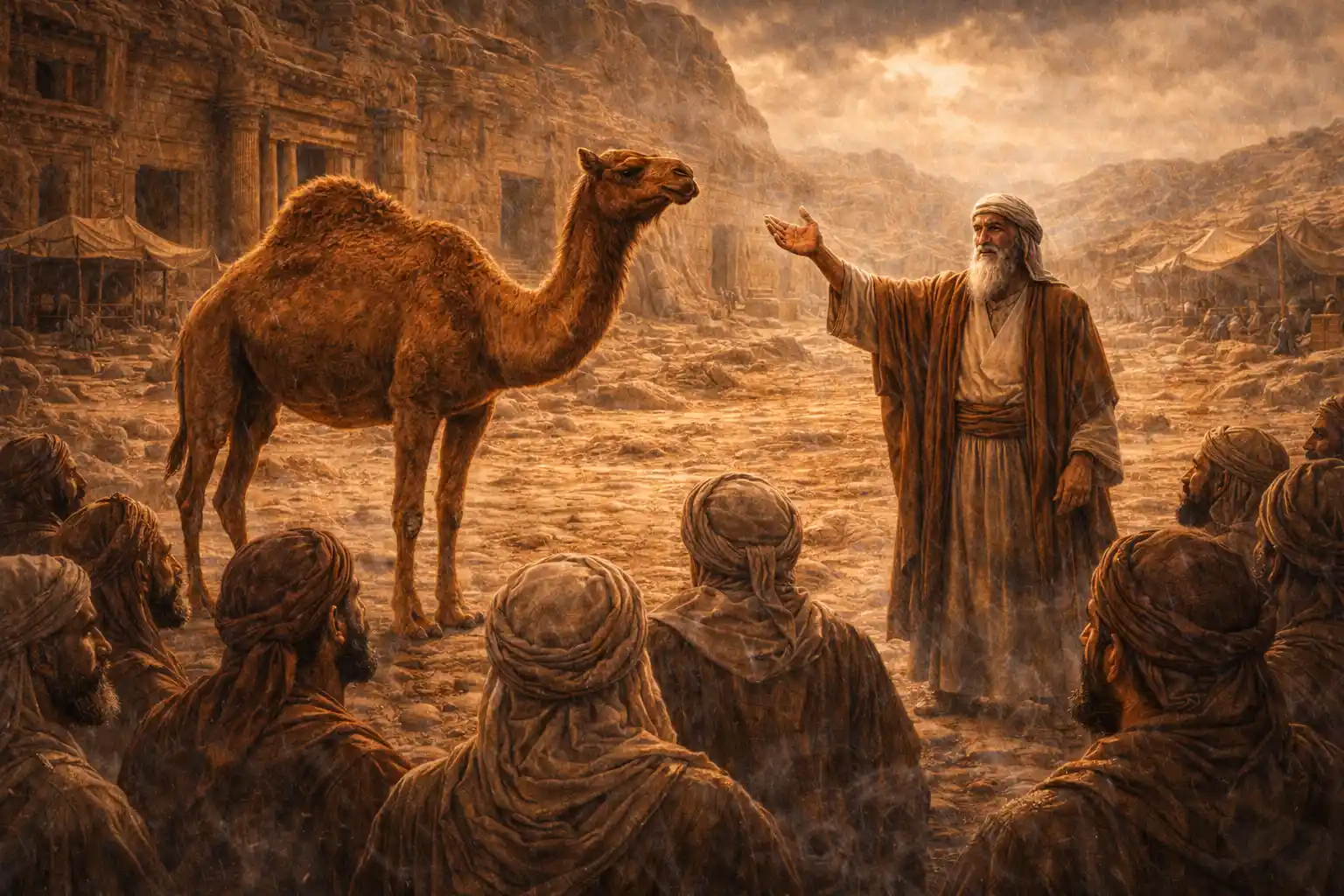
11:65Then they hamstrung her. So he said: “Enjoy yourselves in your dwelling place three days. This is a threat that will not be belied.”

11:66So when Our command came, We saved Salih and those who believed with him by a mercy from Us, and from the ignominy of that day. Indeed, your Lord, He is the All Strong, the All Mighty.
11:67And the (awful) cry overtook those who had wronged , so they lay prostrate (dead) in their dwellings.
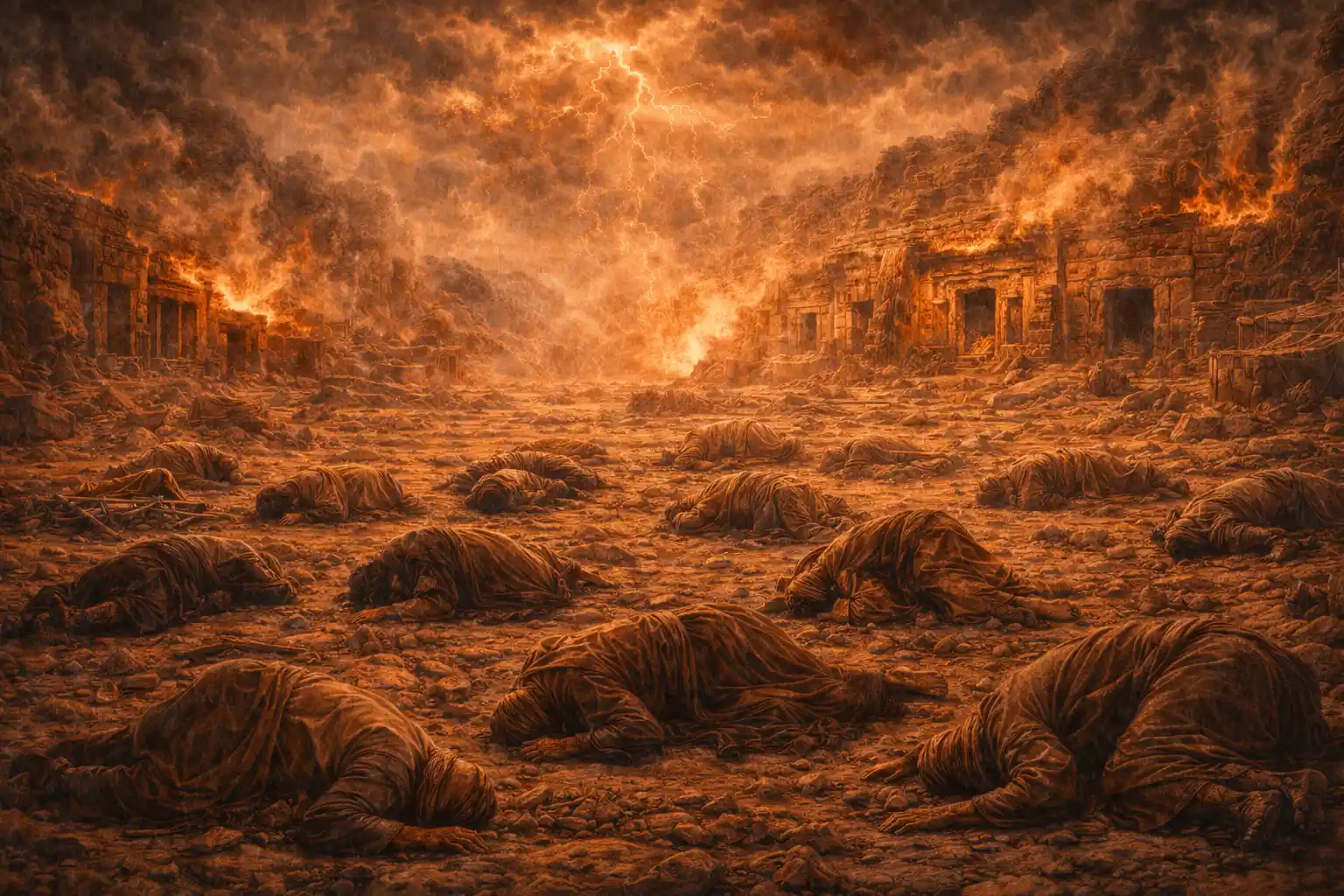
11:68As though they had not dwelt therein. Behold, indeed Thamud disbelieved in their Lord. Behold, a far removal for Thamud.
Qur'an-Only Explanation (Key Points)
- Ṣāliḥ calls Thamūd back to Allah: He brought you forth and settled you on earth—be accountable (61).
- The people admit Ṣāliḥ was previously ‘a hope’—truth becomes inconvenient when it challenges inherited worship (62).
- Ṣāliḥ states a key logic: disobeying Allah has no rescue; rejecting mercy increases loss (63).
- The she-camel is a direct sign and a test of restraint and respect for Allah’s signs (64).
- They harm the sign; the timeline is short; the consequence is decisive (65–68).
Cross-check verses: Related Qur’an checkpoints: 5:48, 6:114–115, 7:3.
11:69And indeed, Our messengers came to Abraham with good news. They said: “Peace.” He said: “Peace,” then delayed not to bring a roasted calf.

11:70Then when he saw their hands not reaching to it, he mistrusted them and conceived a fear of them. They said: “Fear not, indeed, we have been sent to the people of Lot.”

11:71And his wife was standing by, so she laughed. Then We gave her good tidings (of the birth) of Isaac, and after Isaac, Jacob.
11:72She said: “woe unto me, shall I bear a child and I am an old woman, and this, my husband is an old man. Surely, this is indeed a strange thing.”

11:73They said: “Do you wonder at the command of Allah. The mercy of Allah and His blessings be upon you, O people of the house. Surely, He is All Praiseworthy, All Glorious.”
11:74Then when the fear had gone away from Abraham, and the glad news had reached him, he began to argue with Us on behalf of the people of Lot.
11:75Surely, Abraham was, without doubt forbearing, compassionate, oft-turning (to Allah).
11:76(It was said): “O Abraham, forsake this. Indeed, your Lord's command has gone forth. And indeed, there will come to them a punishment which cannot be turned back.”
11:74–76 – Abraham’s Mercy, and the Limits of the Decree
-
11:74 — Abraham argues on behalf of Lūṭ’s people
-
“When the fear had gone away from Abraham…”
In the earlier verses, Abraham became uneasy when the visitors (Allah’s messengers) did not eat. In that time and culture, refusing food could signal danger—so Abraham felt fear. -
“…and the glad news had reached him…”
They reassured him and gave him the good news (a promised child). Now Abraham is calm again. -
“he began to argue with Us on behalf of the people of Lot.”
This does not mean Abraham is fighting Allah or rejecting Allah’s judgment. It means he pleads and intercedes:- asking if punishment can be delayed, reduced, or if they can be spared if they repent;
- doing so out of mercy, and because Lūṭ is among them (a prophet living in that society).
-
“When the fear had gone away from Abraham…”
-
11:75 — Why Abraham did this
“Abraham was forbearing, compassionate, oft-turning (to Allah).”- Forbearing (ḥalīm): not harsh or quick to demand destruction; patient and restrained.
- Compassionate (awwāh): deep concern for people; grieves for their fate and wants guidance, not doom.
- Oft-turning to Allah (munīb): constantly returns to Allah—his pleading is not rebellion, but the action of a servant seeking Allah’s mercy.
-
11:76 — Why Abraham is told to stop
-
“O Abraham, forsake this…”
Stop pleading for their rescue at this point. -
“Your Lord’s command has gone forth…”
The decision is now final. The case has passed the stage of warning and delay; the decree is issued. -
“There will come to them a punishment which cannot be turned back.”
The punishment is now inevitable for that community because their corruption reached a point where there is no remaining basis for postponement. It also implies that the time for repentance (as a community) has effectively ended, and the judgment is proceeding.
-
“O Abraham, forsake this…”
11:77And when Our messengers (the angels) came to Lot, he was anguished for them, and felt for them discomfort. And he said: “This is a distressing day.”
11:78And his people came to him, rushing to him. And before (this), they had been doing evil deeds. He said: “O my people, here are my daughters, they are purer for you. So fear Allah, and do not disgrace me concerning my guests. Is there not among you a right-minded man.”
11:79They said: “Surely, you know that we have no right to your daughters, and indeed you know what we want.”
11:80He said: “If only that I had strength against you, or I could seek refuge in some powerful support.”
11:81They (the angels) said:O Lot, indeed we are messengers from your Lord. They shall never reach you. So travel with your family in a part of the night, and let not any of you turn around, except your wife. Indeed, will afflict her, that which will afflict them. Indeed, their promised hour is morning. Is not the morning near.”
11:82So when Our command came, We turned it (the township) upside down, and We rained upon it stones of layered baked clay.
11:83Marked from your Lord. And it (punishment) is not far off from the wrong doers.

11:77–83 – Lūṭ, the Mob, and Allah’s Decisive Judgment
-
11:77 — Lūṭ becomes distressed when the messengers arrive
-
“he was anguished for them… and felt… discomfort”
Lūṭ is anxious because he knows his town is corrupt and predatory. He fears his people will try to harm his guests, and he feels burdened: “How will I protect them?” -
“This is a distressing day.”
He realizes the visit will trigger confrontation and crisis.
-
“he was anguished for them… and felt… discomfort”
-
11:78 — The people rush to him; Lūṭ pleads for lawful conduct
-
“rushing to him… they had been doing evil deeds”
Their wrongdoing is a long-standing pattern. Their rush shows shameless urgency, not respect or restraint. -
“Here are my daughters, they are purer for you”
This is Lūṭ redirecting them to what is lawful and clean instead of disgrace:- Either his literal daughters (offering a lawful path, not abuse),
- or “the daughters of the community” (women of the town) in a lawful marriage sense—since a prophet stands as a moral guardian for his people.
-
“Fear Allah… do not disgrace me concerning my guests”
He appeals to taqwā (Allah’s accountability) and basic honor: guests must be protected, not harmed. -
“Is there not among you a right-minded man?”
He hopes at least one person still has reason and conscience.
-
“rushing to him… they had been doing evil deeds”
-
11:79 — They admit their intention
-
“We have no right to your daughters… you know what we want”
They reject the lawful option and openly confess their forbidden desire. This is deliberate rebellion against moral limits.
-
“We have no right to your daughters… you know what we want”
-
11:80 — Lūṭ feels powerless
-
“If only I had strength… or… powerful support”
He wishes he had force or allies to stop them, showing how isolated a prophet can feel within a corrupt society.
-
“If only I had strength… or… powerful support”
-
11:81 — The angels reveal themselves and give the escape plan
-
“We are messengers from your Lord. They shall never reach you.”
Reassurance: the mob will not succeed. Allah has taken control of the outcome. -
“Travel… in a part of the night… let not any of you turn around”
Leave quietly before dawn. Do not hesitate or look back with attachment or panic—keep moving in obedience. -
“except your wife”
She is excluded from rescue because she is not truly aligned with the believers and will share the fate of the wrongdoing people. -
“their promised hour is morning”
Judgment is imminent. Lūṭ only needs to endure the night and depart.
-
“We are messengers from your Lord. They shall never reach you.”
-
11:82–83 — The punishment and the wider warning
-
“We turned it upside down…”
A total overthrow: complete destruction of the township. -
“We rained upon it stones of layered baked clay”
A severe, targeted punishment from above—decisive and not random. -
“Marked from your Lord… not far off from the wrongdoers”
The punishment is assigned with precision. The warning extends beyond that town: persistent wrongdoing has consequences, and no society should feel immune.
-
“We turned it upside down…”
11:84And to the Midian (We sent) their brother Shueyb. He said: “O my people, worship Allah. You have no god other than Him. And do not decrease from the measure and weight. Indeed, I see you in prosperity, and indeed, I fear for you the punishment of a day that will encompass (you) all around.”

11:85“And O my people, give full measure and weight in justice, and reduce not people in respect of their goods. And do not go about creating corruption in the land.”
11:86“That which Allah leaves (with you) is better for you if you are believers. And I am not a guardian over you.”
11:87They said: “O Shueyb, does your prayer command you that we should leave off that which our fathers used to worship, or that (we should leave off) what we do with our wealth as we please. Indeed you are the forbearing, the guide to right behavior.”
11:88He said: “O my people, do you see, if I am upon a clear evidence from my Lord, and He has provided me from Him a fair sustenance. And I do not intend, in opposition to you, to do that what I forbid you from. I intend not but reform as much as I am able. And my success is not except from Allah. Upon Him I trust, and unto Him I turn (repentant).”
11:89“And, O my people, let not (your) opposition to me lead you (to any crime) that there befall you, similar to that which befell the people of Noah, or the people of Houd, or the people of Salih. And the people of Lot are not far off from you.”
11:90“And ask forgiveness of your Lord, then turn unto Him (in repentance). Surely, my Lord is Most Merciful, Most Loving.”
11:91They said: “O Shueyb, we do not understand much of what you say, and indeed we do see you weak among us. And if (it was) not for your family, we would certainly have stoned you. And you are not powerful against us.”
11:92He said: “O my people, is my family more to be honored by you than Allah. And you cast Him behind your back. Indeed, my Lord is surrounding all that you do.”
11:93“And O my people, work according to your ability. Indeed, I am working (on my way). You will soon know to whom will come the punishment that will disgrace him, and who is a liar. And watch you, indeed, I (too) am watching with you.”
11:94And when Our command came, We saved Shueyb and those who believed with him by a mercy from Us. And the (awful) cry seized those who had wronged. And by morning, they lay prostrate in their dwellings.
11:95As if they had never prospered there. Behold, a far removal for Midian, just as Thamud had been removed afar.

Qur’an-Only Explanation (Simple, Detailed)
-
11:84 — The core message: Tawḥīd + economic honesty
Shuʿayb begins with the foundation:- “Worship Allah. You have no god other than Him.” Their biggest error is spiritual: they live as if Allah is not the authority over life, money, and behavior.
- “Do not decrease from the measure and weight.” They were cheating in trade: under-measuring, under-weighing, shortchanging customers. This is not “a small business trick.” In the Qur’an, it is zulm (oppression) because it steals from people.
- “I see you in prosperity… I fear for you the punishment…” They are not poor or desperate. They are doing corruption while already well off. Shuʿayb warns: prosperity does not protect you from accountability; it can become a test.
-
11:85 — Full justice in transactions, no corruption in society
This verse expands from “don’t cheat” into “build a just economy”:- “Give full measure and weight in justice.” Be accurate and fair—no manipulation, no hidden loss.
- “Reduce not people in respect of their goods.” Don’t devalue what people own—this includes fraud, scamming, exploiting the weak, or using power to take what isn’t yours.
- “Do not go about creating corruption in the land.” Cheating isn’t only “personal sin.” It spreads social fasād (corruption): trust collapses, resentment grows, markets become predatory, and society becomes unstable.
-
11:86 — Halal profit is better; Shuʿayb is not a controller
- “That which Allah leaves (with you) is better for you if you are believers.” What you earn honestly—even if it’s less—is better than extra wealth gained by zulm. Barakah (blessing) comes with lawful gain; stolen gain carries hidden harm.
- “I am not a guardian over you.” Shuʿayb is not forcing people. He is delivering the message. This is a Qur’anic pattern: prophets warn, clarify, and call, but they do not control hearts.
-
11:87 — Their mockery: “Are you policing our religion and money now?”
They respond with sarcasm:- “Does your prayer command you…?” They mock his worship as if it’s just “personal spirituality” with no right to affect society.
- They complain about two things:
- Leaving inherited worship (“what our fathers used to worship”).
- Being told how to use wealth (“what we do with our wealth as we please”).
- This shows their mindset: religion should not interfere with economics; tradition should not be challenged; “my money, my rules.”
- They call him “forbearing, rightly guided” in a tone that can imply mock praise: “So holy and wise—yet you want to change our entire system?”
-
11:88 — Shuʿayb’s integrity and purpose
- “If I am upon a clear evidence from my Lord…” He’s not speaking from opinion, culture, or guesswork. He is acting on clear guidance from Allah.
- “He has provided me… fair sustenance” Shuʿayb himself is provided for—meaning he’s not doing this for money or power.
- “I do not intend… to do what I forbid you from.” He is not a hypocrite. He is not telling them “don’t cheat” while cheating himself.
- “I intend not but reform as much as I am able.” His mission is islāḥ (reform/repair)—fixing a broken moral and economic system.
- “My success is not except from Allah… Upon Him I trust… to Him I turn.” Results aren’t in his control; Allah decides outcomes. His role is sincerity and consistency.
-
11:89 — Warning by historical pattern: “Don’t repeat what happened to others”
- “Let not your opposition to me lead you…” Don’t let hatred of the messenger push you deeper into injustice.
- He lists previous destroyed peoples: Noah, Hūd, Ṣāliḥ. The point: history has a pattern—persistent zulm + rejection of guidance leads to downfall.
- “And the people of Lot are not far off from you.” Meaning: geographically close, or not long ago, or similar in moral collapse. Either way: you have examples—don’t pretend you didn’t.
-
11:90 — The door of mercy is still open
- “Ask forgiveness… then turn to Him.” It’s not “you’re doomed.” It’s still: repent sincerely, return to Allah, repair wrongdoing.
- “My Lord is Most Merciful, Most Loving.” Allah’s mercy is real—but it is for those who turn back, not for those who insist on corruption.
-
11:91 — They threaten him and try to belittle him
- “We do not understand much of what you say…” Often a tactic: pretending it’s too complex so they don’t have to obey. The core is simple: worship Allah, stop cheating, stop corruption.
- “We see you weak…” They judge truth by power, not by evidence.
- “If not for your family, we would have stoned you.” Open threat. They admit: they are restrained only by tribal consequences, not by justice.
-
11:92 — Shuʿayb exposes their real “god”: social power
- “Is my family more honored by you than Allah?” You fear tribal backlash more than you fear Allah. Their “authority” is social pressure and power, not truth.
- “You cast Him behind your back.” You treat Allah’s commands as irrelevant, like something thrown away.
- “My Lord is surrounding all that you do.” Allah sees everything—private cheating, public corruption, threats, intentions.
-
11:93 — Final warning: time will reveal who is truthful
- “Work according to your ability… I am working.” You continue your path; I continue mine. The truth will become clear by outcomes Allah brings.
- “You will soon know… who is a liar.” Reality exposes who was right: messenger or corrupt elite.
- “Watch… I am watching.” Not spying—meaning: wait and see what Allah brings.
-
11:94–95 — The outcome: rescue for believers, destruction for wrongdoers
- “We saved Shuʿayb and those who believed… by a mercy from Us.” Salvation is Allah’s mercy, not tribal power.
- “The awful cry seized those who had wronged…” Sudden, overwhelming punishment—false security collapses quickly.
- “By morning, they lay prostrate in their dwellings.” Destroyed in their own homes—where they felt safest.
- “As if they had never prospered there.” Wealth and markets vanish like they never existed. Unjust prosperity is fragile.
- “A far removal for Midian…” Same law, same outcome as earlier nations who persisted in wrongdoing.
Shuʿayb called Madyan to worship Allah alone, stop cheating people in business, stop spreading corruption, and repent while there is time. They mocked him, threatened him, and valued tribal power over Allah. So Allah saved the believers and destroyed the wrongdoers—showing that economic zulm and moral rebellion have consequences, even if a society seems prosperous.
11:96And indeed, We sent Moses with Our signs and a clear authority.
11:97To Pharaoh and his chiefs, but they did follow the command of Pharaoh, and the command of Pharaoh was no right guide.
11:98He will precede his people on the Day of Resurrection, and he will lead them into the Fire And evil indeed is the place to which they are led.
11:99A curse is made to follow them in this (world) and on the Day of Resurrection. Evil is the gift (that will be) given (to them).
Qur'an-Only Explanation (Key Points)
- Mūsā is sent with signs and clear authority (96).
- Pharaoh’s leadership is named as misguidance; followers are led into fire—leaders can carry others into ruin (97–98).
- A curse follows in this life and the next; misguidance has an enduring cost (99).
Cross-check verses: Related Qur’an checkpoints: 2:166–167, 14:21–22, 33:67–68.
11:100That is from the news of the townships (destroyed), We relate it to you (Muhammad). Some of them are standing and (some already) mown down.
11:101And We did not wrong them, but they did wrong to themselves. So their gods, on whom they called upon beside Allah, did not avail them at all when the command of your Lord came. And they increased nothing to them other than ruin.
11:102And such is the seizure of your Lord when He seizes the townships while they are doing wrong. Indeed, His seizure is painful, severe.
11:103Indeed, in that there is a sure sign for those who fear the punishment of the Hereafter. That is a Day whereon mankind will be gathered together, and that is a Day (that will be) witnessed.
11:104And We do not delay it except for a term appointed.
11:105The day (when) it comes, no soul shall speak except by His (Allah's) permission. So some among them will be wretched, and (others) blessed.
11:106So as for those who were wretched, they shall be in the Fire. For them therein will be sighing and wailing.
11:107They will dwell therein, so long as the heavens and the earth endure, except that which your Lord wills. Indeed, your Lord is doer of what He wills.
11:108And as for those who were blessed, they shall be in the Garden, dwelling therein, so long as the heavens and the earth endure, except that which your Lord wills. A gift without an end.
11:109So do not be in doubt (O Muhammad) as to what these (pagans) worship. They worship nothing except what their fathers worshipped before. And indeed, We shall repay them in full their portion without diminution.
11:110And indeed, We gave Moses the Book, but there arose disagreements about it. And if it had not been for a word that had already gone forth from your Lord, it would have been judged between them. And indeed, they are in grave doubt concerning it.
11:111And indeed, to each your Lord will certainly repay in full for their deeds. Indeed, He is All Aware of what they do.
11:112So stand firm on the straight path as you are commanded, and those who turn (unto Allah) with you, and transgress not. Indeed, He is All-Seer of what you do.
11:113And incline not toward those who do wrong, lest the Fire should touch you, and you have no protecting friends other than Allah, nor you would then be helped.
Qur’an-Only Explanation (11:100–113)
- 11:100 — Why Allah tells these stories
- These are real historical examples of communities that collapsed.
- “Some… are standing”: some ruins/cities still exist (their remains are visible).
- “Some… mown down”: others are completely wiped out—like crops cut down and gone.
- Main lesson: these stories are not entertainment; they are warnings that civilizations can fall when wrongdoing becomes the norm.
- 11:101 — Allah did not wrong them; they harmed themselves
- “We did not wrong them…”: their destruction was not injustice from Allah.
- They ruined themselves through:
- oppression (ẓulm),
- corruption,
- rejecting truth,
- persisting after warnings.
- “Their gods… did not avail them”: what they relied on besides Allah could not save them, such as:
- idols,
- false beliefs,
- social status,
- protectors,
- religious “systems” not from Allah.
- “They increased nothing… other than ruin”: false reliance made them worse—because it made them feel safe, so they continued wrongdoing.
- 11:102 — Allah’s seizure is severe when wrongdoing becomes active
- Allah’s punishment is described as a “seizure”: sudden, powerful, unstoppable.
- It is not random; it comes when people are actively persisting in wrongdoing.
- “painful, severe”: when the collapse comes, it is not gentle—it is decisive.
- 11:103 — These stories point to the Final Gathering
- Destroyed towns are a sign that:
- accountability is real,
- consequences exist,
- therefore the Hereafter is even more certain.
- “A Day… gathered… witnessed”:
- everyone will be present,
- nothing is hidden,
- reality will be undeniable, and truth exposed openly.
- Destroyed towns are a sign that:
- 11:104 — Delay is not cancellation
- Allah may delay punishment or the Final Hour, but that does not mean:
- He forgot,
- He approved,
- or it won’t happen.
- It is delayed only because Allah set a fixed time.
- Allah may delay punishment or the Final Hour, but that does not mean:
- 11:105 — No one speaks freely on Judgment Day
- “No soul shall speak except by His permission”:
- nobody controls the room,
- no one can argue their way out,
- no chaos, no manipulation, no courtroom theatrics.
- “Some… wretched, and (others) blessed”: two broad outcomes—
- those who ruined themselves,
- those who responded to guidance.
- “No soul shall speak except by His permission”:
- 11:106 — The wretched: grief and regret
- “In the Fire… sighing and wailing” describes:
- intense pain,
- deep regret,
- humiliation,
- loss.
- This is not casual punishment; it is existential distress.
- “In the Fire… sighing and wailing” describes:
- 11:107 — The Fire’s duration and Allah’s absolute authority
- The Fire is described as long-lasting, not temporary like worldly punishment.
- “except that which your Lord wills” reminds: Allah is not bound—He decides.
- Key point: the verse emphasizes Allah’s complete sovereignty, not human control over outcomes.
- 11:108 — The blessed: a gift without end
- The Garden is described as:
- stable,
- secure,
- not fragile,
- not temporary.
- “Gift”: not something demanded as a right; it is Allah’s mercy and generosity.
- “Without an end”: unlike dunya blessings that expire.
- The Garden is described as:
- 11:109 — Don’t be confused by inherited religion
- “They worship… what their fathers worshipped”: confidence is not evidence.
- Their religion is based on:
- inheritance,
- imitation,
- “this is what we found our fathers doing.”
- “We shall repay them in full”: nobody escapes consequences—good or bad.
- 11:110 — Even earlier scripture communities split and doubted
- Pattern: people receive guidance, then:
- argue,
- factionalize,
- create camps,
- distort priorities.
- Allah can judge instantly, but He delays with wisdom (time for proof, clarity, accountability).
- “grave doubt”: not minor questions—deep uncertainty and dispute.
- Pattern: people receive guidance, then:
- 11:111 — Full repayment, perfectly informed
- Allah will repay everyone fully: no one is missed, no deed is lost, no intention is hidden.
- This destroys the illusion:
- “nobody saw,”
- “it was small,”
- “I’ll get away with it.”
- 11:112 — The command: stay straight, don’t cross limits
- “Stand firm” means discipline:
- keep the line,
- don’t bend truth to fit people,
- don’t soften guidance to gain approval.
- This applies to the Prophet and also to those who turn with him (the community).
- “Transgress not”: do not exceed Allah’s boundaries—
- no ẓulm,
- no oppression,
- no corruption,
- no religious inventions that override Allah’s Book.
- “He is All-Seer”: Allah watches real behavior, not slogans.
- “Stand firm” means discipline:
- 11:113 — Don’t lean toward wrongdoers
- “Incline not” is practical:
- don’t support them,
- don’t excuse them,
- don’t normalize their ẓulm,
- don’t become their propaganda tool,
- don’t benefit from wrongdoing while pretending neutrality.
- “lest the Fire should touch you”: even “leaning” toward wrongdoing is spiritually dangerous because it makes ẓulm feel acceptable over time.
- “No protecting friends other than Allah”: the people you compromised for will not save you when consequences come.
- “Incline not” is practical:
11:114And establish the prayer at the two ends of the day and in some hours of the night. Indeed, the good deeds drive away the evil deeds. That is a reminder for those who are mindful (of Allah).
11:115And be patient (O Muhammad), for indeed, Allah loses not the reward of the good-doers.
11:116So why were there not, among the generations before you, those possessing a remnant (of wisdom), prohibiting from corruption on earth, except a few of those We saved from among them. And they followed those who did wrong in what they had been luxuriating in, and they were criminals.
11:117And your Lord would not destroy the towns unjustly, while their people were reformers.
11:118And if your Lord had so willed, He could surely have made mankind as one nation, but they will not cease to disagree.
11:119Except whom your Lord has bestowed mercy. And for that did He create them. And the word of your Lord has been fulfilled. “Surely, I shall fill Hell with the jinns and mankind all together.”
11:120And all that We relate to you (O Muhammad) of the news of the messengers is that by which We make firm your heart. And in this has come to you the truth, and an admonition, and a reminder for the believers.
11:121And say to those who do not believe: “Work according to your ability. We indeed are working (too).”
11:122“And wait. We indeed are waiting (too).”
11:123And to Allah belongs the unseen of the heavens and the earth, and to Him all matters will be returned. So worship Him and put your trust in Him. And your Lord is not unaware of what you do.
Qur’an-Only Explanation (11:114–123)
- 11:114 — Prayer anchors the day, and good deeds erase the effect of bad deeds
“Establish the prayer at the two ends of the day and in some hours of the night.”
- Allah is telling the Prophet (and believers) to keep regular prayer as a fixed structure in life.
- “Two ends of the day” means the day has a beginning side and an ending side (early and late parts).
- “Some hours of the night” means: do not make worship only daytime—there should also be worship in the night portion.
- The main point is not to argue over a timetable; the point is: prayer should be consistent and spread through your time so you don’t drift spiritually.
“Indeed, the good deeds drive away the evil deeds.”
- This is a principle: when you sincerely do good (prayer, charity, truthfulness, repentance, helping people), it pushes out the effects of sins.
- How? Good deeds soften the heart, remove arrogance, and restore self-control.
- They also involve turning back to Allah, which includes seeking forgiveness.
“That is a reminder for those who are mindful.”
People who reflect will understand: Allah is giving a practical method to stay clean and stable.
- 11:115 — Patience is never wasted
“Be patient… Allah loses not the reward of the good-doers.”
- Patience here means: continuing truth even when mocked, staying moral when others are corrupt, and holding yourself steady when life is hard.
- Allah is telling the Prophet: your effort is not lost even if results look slow.
- Reward is guaranteed, because Allah does not “misplace” good.
- 11:116 — Most societies collapse because few people resist corruption
“So why were there not… those possessing a remnant (of wisdom), prohibiting corruption on earth, except a few…”
- Allah is describing a historical pattern: when corruption spreads, most people go quiet, and only a small minority tries to stop it.
- “Remnant of wisdom” means: a leftover group with enough insight to say: “This is wrong. Stop it.” “Don’t destroy society.”
- Allah says: only a few did that, and those few were the ones He saved.
“And they followed those who did wrong in what they had been luxuriating in…”
- Most people prefer comfort and luxury over truth.
- They follow wrong leaders because wrong leaders often promise: ease, pleasure, no accountability, and “don’t judge me.”
- This is why society becomes criminal: people choose comfort over reform.
- 11:117 — Allah does not destroy societies that are reforming
“Your Lord would not destroy the towns unjustly, while their people were reformers.”
- Key rule: Allah is not “trigger-happy.”
- If a community has people actively doing reform (islāḥ)—fixing injustice, stopping oppression, calling to truth, improving society—then collective destruction is not how Allah acts “unjustly.”
- Meaning: reform protects societies, because reform is proof that truth is still alive.
- 11:118 — Disagreement is part of the test: humans will keep disagreeing
“If your Lord had so willed, He could surely have made mankind as one nation…”
- Allah could have made humans all the same, thinking the same.
- But He didn’t, because choice and testing require real decisions.
“But they will not cease to disagree.”
- Disagreement will continue: arguments, sects, ideologies, ego fights, and people twisting truth.
- The verse is realistic: disagreement happens because humans have desires, pride, fears, and different responses to guidance.
- 11:119 — Mercy is for those Allah guides; Hell is filled by persistent rejection
“Except whom your Lord has bestowed mercy.”
- Not everyone will be trapped in endless disagreement and ego.
- Some receive Allah’s mercy: they become humble, they accept truth, they reform.
“And for that did He create them.”
- Meaning: Allah created people for a purpose that includes knowing guidance, receiving mercy, and being accountable.
- Life is moral and purposeful, not random opinions with no consequences.
“Surely, I shall fill Hell with the jinns and mankind all together.”
- This is the end result for those who insist on wrongdoing and rejection.
- It is not Allah “enjoying punishment.” It is the outcome of people who persist in rebellion until they deserve it.
- 11:120 — The stories of prophets strengthen the heart
“We relate… the news of the messengers… that by which We make firm your heart.”
- The Prophet faced mockery, denial, threats, and loneliness.
- Allah says: these stories are sent to stabilize you: “You are not the first.” “This pattern happened before.” “Truth wins in the end.”
“In this has come to you the truth, an admonition, and a reminder for the believers.”
- Truth: reality and guidance.
- Admonition: warning—don’t repeat the mistakes.
- Reminder: for believers to stay steady.
- 11:121–122 — Let the deniers continue; the believers continue; time will reveal truth
“Work according to your ability. We indeed are working (too).”
- This is not “do whatever you want and it’s fine.”
- It means: you will take your path, we will take ours—then Allah will judge the results.
“And wait. We indeed are waiting (too).”
- Meaning: the outcome will come.
- It’s like: “Let the timeline unfold—Allah’s judgment will arrive.”
- 11:123 — Allah owns the unseen; everything returns to Him; trust Him
“To Allah belongs the unseen of the heavens and the earth…”
- “Unseen” means what people hide, future events, inner intentions, and hidden consequences.
- Allah controls what we cannot see.
“To Him all matters will be returned.”
- Every situation ends in Allah’s court.
- No injustice escapes final accounting.
“So worship Him and put your trust in Him.”
- Since Allah owns outcomes, the right response is worship (obedience) and trust (tawakkul).
“Your Lord is not unaware of what you do.”
- This closes the section with accountability: no hidden cheating, no secret oppression, no private hypocrisy goes unnoticed.
Pray consistently and keep doing good, because good cleans the damage of sin. Be patient; Allah never wastes righteous effort. Societies fall when people stop resisting corruption and follow luxury and wrong leaders. Allah does not destroy communities that are reforming. Disagreement will exist, but Allah’s mercy guides some to truth. The stories of prophets strengthen the heart and warn believers. In the end, Allah owns the unseen, everything returns to Him, so worship Him and trust Him.