- The full English verse text
- Directly under it is a Qur'an-only explanation – no hadith, no sectarian fiqh.
- Special focus on tawḥīd, shirk, innovations, intercession, and blind following of scholars/forefathers.
- All authority is taken from the Qur'an itself (e.g., 6:114, 17:36, 45:6).
1. All praises be to Allah, Who created the heavens and the earth, and made the darkness and the light. Then those who disbelieve ascribe (others) to be equals to their Lord.
2. He it is Who has created you from clay, then He has decreed a term (of life). And a determined term (of Resurrection) is with Him, then you are in doubt.
3. And He is Allah in the heavens and in the earth. He knows what you conceal and what you reveal, and He knows what you earn.
4. And never came to them a sign of the signs of their Lord except they turned away from it.
5. Indeed, they denied the truth when it came to them. So there will soon come to them the news of that which they used to mock at.
6. Have they not seen how many a generation We have destroyed before them, whom We had established on the earth, such as We have not established you. And We showered on them abundant rains from the sky, and We made the rivers flow beneath them, then We destroyed them for their sins, and brought forth after them a generation of others.
7. And even if We had sent down to you (Muhammad) a book (inscribed) on parchment, so that they could touch it with their hands, those who disbelieve would have said: “This is nothing but obvious magic.”
8. And they say: “Why has not an angel been sent down to him.” And if We had sent down an angel, the matter would surely have been judged, then no respite would be granted to them.
9. And if We had appointed him an angel, We indeed would have made him (in the form of) a man, and We would have certainly covered them with (confusion), that in which they cover themselves.
10. And indeed, messengers have been ridiculed before you, then those who mocked at them were surrounded by that which they used to ridicule.
11. Say (O Muhammad): “Travel in the land, then see how was the end of those who denied.”
12. Say: (O Muhammad): “To whom belongs whatsoever is in the heavens and the earth.” Say: “To Allah.” He has decreed upon Himself mercy. He will surely assemble you on the Day of Resurrection, there is no doubt about which. Those who have lost their souls are the ones who do not believe.
Explanation (6:1–12)
-
6:1 – All praise goes back to the real Creator, not to “partners”:
- Allah alone created the heavens and the earth, and made the darkness and the light.
- Yet disbelievers still give others a share with Him: so-called “saints”, sheikhs, imams, idols, systems and desires.
This verse attacks every form of shirk – including when people claim to be Muslim but still call on the Prophet, a sheikh, a “wali”, or jinn as if they share power with Allah. -
6:2 – Created from clay, living on two fixed deadlines:
- We are created from a low, non-divine origin: clay.
- There are two fixed terms:
- Your personal life term – when you die.
- The Resurrection term – fixed with Allah, cannot be delayed.
- Even with this certainty, many still doubt and live like there is no accountability coming.
-
6:3 – Allah knows everything, in heaven and earth:
- “He is Allah in the heavens and in the earth” = His authority, command, and knowledge surround all creation.
- He knows what you hide and what you show; He knows every deed you “earn”.
No imam, sheikh or so-called “wali” has this attribute of knowing the unseen. Anyone claiming constant knowledge of the unseen is contradicting this verse. -
6:4–5 – Signs rejected, mockery will return on them:
- Every sign that comes from their Lord is turned away from.
- They deliberately deny the truth when it reaches them.
- But soon, the “news” of what they mocked – punishment, regret, and reality – will come to them.
-
6:6 – Past powerful nations destroyed despite strength and rain:
- Allah reminds them of past generations:
- They were more strongly established on earth than the current people.
- They had abundant rain, rivers, and material blessings.
- Yet they were destroyed for their sins and replaced by others.
Power, economy, and technology do not protect anyone from Allah’s judgment. What protects is obedience and tawḥīd, not numbers or wealth. - Allah reminds them of past generations:
-
6:7–9 – Even extra miracles will not fix a corrupt heart:
- If a physical book came down on parchment that they could touch, they would still call it “magic”.
- If angels came, the test would be over and the matter settled; no more respite.
- If the messenger had been an angel, he would still need to appear as a man, and they would still be confused and argue.
The real problem is not lack of signs – it is arrogance and stubbornness.
-
6:10–11 – Mocking messengers is an old pattern:
- Messengers before Muhammad were ridiculed.
- In the end, the very punishment they mocked surrounded them.
- Allah tells the Prophet to say: travel and see how the rejectors ended.
Today, those who defend pure Qur'an-only tawḥīd and reject fabricated innovations may also be mocked – this does not make them wrong; it puts them in the same pattern as earlier believers.
-
6:12 – Ownership, mercy, and the certain gathering:
- The question “To whom belongs whatsoever is in the heavens and the earth?” exposes the answer: Allah alone.
- He has written mercy upon Himself – He chose to treat creation with mercy.
- He will surely assemble all on the Day of Resurrection, no doubt in it.
- Those who have truly lost themselves are the ones who don’t believe in that meeting.
This kills the idea that mercy is controlled by a prophet, imam, or “saint”. Mercy belongs to Allah alone. The Prophet only delivers the message (Qur'an).
13. And to Him belongs whatsoever dwells in the night and the day, and He is the All Hearing, the All Knowing.
14. Say (O Muhammad): “Shall I take as a protector other than Allah, the Creator of the heavens and the earth. And it is He Who feeds and is not fed.” Say: “Verily, I have been commanded to be the first of those who submit themselves (to Allah), and not to be of those who associate others (with Allah).”
15. Say: “Indeed I fear, if I should disobey my Lord, the punishment of a tremendous Day.”
16. He from whom it (punishment) is averted that day, (Allah) has surely been Merciful to him. And that is the manifest success.
17. And if Allah should touch you with affliction, then none can relieve from it except Him. And if He touches you with good, then He has power over all things.
18. And He is the Omnipotent over His slaves, and He is the All Wise, the All Knower.
19. Say (O Muhammad): “What thing is greatest in testimony. Say: “Allah is Witness between me and you. And this Quran has been revealed to me, that I may warn you thereby, and whomsoever it may reach. Do you indeed testify that there are other gods with Allah.” Say: “I bear no (such) witness.” Say: “He is the only One God. And truly I am free of that which you associate (with Him).”
20. Those to whom We have given the Book, they recognize this (Quran), as they recognize their sons. Those who have lost their souls are the ones who do not believe.
21. And who does more wrong than he who invents a lie against Allah, or denies His revelations. Indeed, the wrongdoers will not succeed.
22. And on the day when We shall gather them all together, then We shall say to those who associated others (with Allah): “Where are your partners, whom you used to claim.”
23. Then there will be no excuses for them except that they will say: “By Allah, our Lord, we were not those who associated others (with Allah).”
24. See how they will lie against themselves, and lost from them will be what they used to invent.
25. And among them are those who listen to you, and We have laid over their hearts coverings, lest they should understand it, and in their ears a deafness. And if they were to see every sign, they would not believe in it, to the point that, when they come to you, they dispute with you, those who disbelieve say: “This is nothing but tales of the ancients.”
26. And they prevent (others) from it, and they (themselves) keep away from it. And they do not destroy except themselves, and they perceive not.
27. And If you could see when they shall be made to stand by the Fire, they will say: “Would that we could be sent back, and we would not deny the revelations of our Lord, and we would be among the believers.”
28. Nay but, it has become manifest to them that which they had been concealing before. And if they were sent back, they would certainly revert to that which they were forbidden, and indeed they are liars.
29. And they say: “There is none but our life of the world, and we shall not be raised (again).”
30. And if you could see when they will be made to stand before their Lord. He will say: “Is not this the truth.” They will say: “Yes, by our Lord.” He will say: “So taste the torment because you used to disbelieve.”
31. They indeed are losers who deny the meeting with Allah, until when the Hour comes upon them suddenly, they will say: “Alas for us, over what we neglected about it.” And they will bear their burdens on their backs. Is not evil what they bear.
Explanation (6:13–31)
-
6:13 – Everything in night and day belongs to Him:
- Whatever moves, lives, or rests in the night or day is under Allah’s ownership.
- He hears every call and knows every thought – there is no space for “shared control” with any other being.
-
6:14–16 – No protector besides Allah, even the Prophet fears that Day:
- The Prophet is commanded to say very clearly: he cannot take any walī (protector/guardian) besides Allah, Who created everything and feeds all.
- He himself is commanded to be the first to submit and to avoid every form of shirk.
- He openly says he fears the punishment of a tremendous Day if he disobeys his Lord.
- Whoever is saved from that punishment, it is only because Allah had mercy on him – that is the real success, not someone claiming “automatic Jannah” through a ritual or a slogan.
Any theology that makes it sound like you are “safe” just by attaching yourself to a person, group, or formula while ignoring Allah’s commands is against these verses. -
6:17–18 – Harm and benefit are only in Allah’s Hand:
- If He touches you with affliction, no one can remove it except Him.
- If He gives you good, it is also from Him – He has power over everything.
- He is al-Qahhār (the Omnipotent) over His slaves, All-Wise, All-Knowing.
These verses cut the root of calling upon “saints”, dead people, sheikhs, imams, or even prophets for harm/benefit – all power is with Allah alone. -
6:19–20 – Allah as Witness and the Qur’an as a warning to whoever it reaches:
- The greatest testimony is Allah’s witness between the Prophet and the people.
- The Qur’an was revealed to warn: “you and whomsoever it may reach” – meaning, the message is now binding for everyone who receives it.
- They are asked if they testify that there are other gods with Allah. The Prophet is ordered to reject such a testimony completely and declare Allah as the only One God.
- People of the Book who are honest recognize this Qur’an like they recognize their own sons – yet those who reject it have “lost their souls”.
-
6:21 – The worst oppressor:
- Two categories are declared as the most unjust:
- Those who invent lies about Allah – for example, claiming He said something He never said.
- Those who deny His revelations – turning away from the clear verses.
- These people will never truly succeed, even if they look powerful in dunya.
- Two categories are declared as the most unjust:
-
6:22–24 – Mushriks will deny their shirk but their own lies will expose them:
- On the Day of Gathering, the mushriks will be asked: “Where are your partners you used to claim?”
- Their only “excuse” will be to swear by Allah that they were not mushriks.
- Allah exposes them: they are lying against themselves; all their invented partners vanish.
This is exactly the attitude of people who say today: “We are not doing shirk, we’re just ‘respecting’/‘loving’ X and Y” – but in practice, they give those figures powers and roles only Allah has. -
6:25–26 – Listening with blocked hearts, preventing others from the Qur’an:
- Some physically sit and listen to the Prophet, but Allah describes a covering over their hearts and deafness in their ears.
- Even if they see every sign, they refuse to believe; when they come, they only argue and label the Qur’an as “tales of the ancients”.
- They also block others from the Qur’an and keep themselves away from it.
- In reality, they are only destroying themselves without realizing it.
People who aggressively push you to follow books, sects, and sheikhs while making you feel the Qur’an is “not enough” are doing exactly this: they turn people away from Allah’s Book. -
6:27–31 – Regret at the Fire and denial of the Hereafter:
- When they are made to stand by the Fire, they will wish to go back and promise to believe and obey.
- But Allah reveals that the truth they used to hide is now exposed; if they were sent back, they would repeat what they were forbidden from – they were liars in their promises.
- Their main creed in dunya was: “There is only our worldly life, we will not be raised again.”
- When they finally stand before their Lord, He asks: “Is this not the truth?” They admit “Yes, by our Lord”, but then they are told to taste the punishment for their disbelief.
- The real losers are those who denied the meeting with Allah. The Hour surprises them, they regret their negligence, and carry their burdens on their backs.
These verses are a direct warning to any Muslim who lives as if the Hereafter is “far” or doubtful, delaying obedience and repentance. The regret described here is permanent.
32. And the life of this world is nothing but play and amusement. And the abode of the Hereafter is better for those who fear (Allah). Will you not then understand.
33. Indeed, We know that it grieves you what they say. Though indeed, they do not deny you, but it is the revelations of Allah that the wrong doers repudiate.
34. And indeed messengers have been denied before you, so they were patient on being denied, and they were hurt until Our help reached them. And none can alter the words (decrees) of Allah. And Surely there has reached you some news about the messengers (before you).
35. And if their aversion is hard on you, then if you can, seek a tunnel into the earth, or a ladder into the sky, so that you may bring them a sign. And if Allah had so willed, He could have gathered them all to the guidance. So be not you among those who are ignorant.
36. Only those who listen will respond. And the dead whom Allah will raise, then to Him they will be returned.
37. And they say: “Why is not a sign sent down to him from his Lord.” Say: “Indeed, Allah is Able to send down a sign, but most of them do not know.”
38. And there is not a creature on the earth, nor a bird flying on its two wings, but they are communities like you. We have not neglected in the Book (of decrees) a thing. Then unto their Lord they shall be gathered.
39. And those who deny Our revelations are deaf and dumb in darkness. Whomsoever Allah wills, He sends him astray. And whomsoever He wills, He sets him on the straight path.
40. Say: “Have you considered, if there comes upon you the punishment of Allah, or there comes upon you the Hour, would you call upon other than Allah, if you are truthful.
41. Nay but, it is Him you call, so He would remove that for which you called unto Him, if He wills, and you forget what you have associated (with Him).
42. And We did indeed send (messengers) to nations before you, then We seized them with tribulation and adversity, that they might humble themselves.
43. Then why did they not humble themselves when Our torment reached them. But their hearts became hardened, and the devil made fair seeming to them that which they used to do.
44. So when they forgot what they had been reminded of, We opened to them the gates of all things. Until, when they rejoiced in that what they were given, We seized them suddenly, then they were plunged in despair.
45. So the roots of the people who did wrong were cut off. And all the praises be to Allah, the Lord of the worlds.
Explanation (6:32–45)
-
6:32 – Dunya is play and amusement compared to the Hereafter:
- This world is described as la‘ib (play) and lahw (amusement) – temporary distractions that can make you forget your real purpose.
- The true, stable home is the Hereafter, and it is better for those who have taqwā.
- “Will you not understand” is a direct challenge to the mind: if you use your ‘aql properly, you will not sacrifice the eternal for something that is just a game.
-
6:33–34 – Consolation to the Prophet: they reject Allah’s ayāt, not your personality:
- Allah tells the Prophet that He knows how much their words hurt him.
- In reality, they are not rejecting him as a person – they are rejecting the revelations of Allah.
- Previous messengers were also denied and harmed, but they stayed patient until Allah’s help came.
- No one can change the words or decrees of Allah – His promise to support His messengers stands firm.
This is also a comfort for any believer today who is mocked for holding to the Qur’an: people’s problem is with Allah’s message, not with you personally. -
6:35–37 – Craving “extra signs” and the reality of guidance:
- The Prophet is told that even if their rejection is very hard on him, he cannot force guidance on them.
- Even if he could dig a tunnel into the earth or climb a ladder into the sky to bring a “special sign”, it would not change a heart that refuses to listen.
- If Allah had willed, He could have gathered them all on guidance, but He created a world of choice and testing.
- Only those who truly “listen” in their hearts respond; the rest are described as “dead” whom Allah will raise and return to Him.
- People still demand supernatural signs, but Allah tells the Prophet: He can send them if He wills; the real problem is not the lack of signs but the lack of sincerity.
-
6:38 – All creatures are communities, nothing is neglected:
- Every creature on earth and each bird on its wings are ummam (communities) like us: they have a system, provision, and their own way.
- Nothing is neglected in Allah’s “Book of decrees” – all is recorded and known.
- All of them will be gathered to their Lord, showing that accountability is not only for humans, but that the creation is not random or wasted.
-
6:39 – Darkness of denying the revelations and the issue of guidance:
- Those who deny the ayāt of Allah are described as deaf, dumb, and in darkness: they lose their ability to hear, speak, and see the truth properly.
- Allah sends astray whoever insists on turning away, and He guides whoever wants the straight path and seeks it sincerely.
- This is not random: it is tied to the person’s attitude to the truth.
-
6:40–41 – In real danger, people call only upon Allah:
- Allah asks them to think: if His punishment comes, or the Hour arrives, will they call on their idols, saints, or helpers – or will they call on Allah alone?
- The reality is exposed: in real crisis, they forget everyone else and call only on Allah.
- If He wills, He removes the hardship, and then they go back to forgetting Him and returning to their shirk.
Any system of “intercessors” and “holy men” collapses in real danger: the fitrah knows that only Allah can actually save. -
6:42–43 – Trials were sent so people would humble themselves:
- Allah sent messengers to earlier nations and then tested them with hardship and adversity.
- The goal was that they would humble themselves, drop their arrogance, and return to Allah.
- Instead, most of them did not humble themselves when the punishment touched them.
- Their hearts hardened, and shayṭān beautified their actions for them, so sin and false beliefs started to look “good” and “normal”.
-
6:44–45 – When reminders are forgotten, blessings can become a trap:
- When they completely forgot what they had been reminded of, Allah “opened the gates of everything” for them:
- More wealth, more ease, more opportunities – they felt secure and happy.
- Just when they were rejoicing and feeling safe, Allah seized them suddenly, and they fell into despair – no time to repent, no escape.
- The “roots” of the wrongdoers were cut off – a total uprooting of their power and existence.
- All praise in the end belongs only to Allah, Lord of the worlds, Who judges with perfect justice.
Sometimes an increase in blessings after disobedience is not a reward but a setup: Allah opens the gates so that a people go deeper in arrogance, then He seizes them suddenly. The safest path is to respond to every reminder quickly and humbly. - When they completely forgot what they had been reminded of, Allah “opened the gates of everything” for them:
This life is only play and amusement compared to the Hereafter. Rejection of the Qur’an is not a new story: previous messengers faced the same, but they were patient until Allah’s help arrived. Demanding “extra miracles” does not fix a stubborn heart; real guidance is for those who truly listen. Nations that ignore reminders and become arrogant when blessings increase are eventually cut off at the root. The wise person humbles himself early, clings to the Qur’an, and calls only upon Allah in every situation.
46. Say: “Have you considered, if Allah should take away your hearing and your sight and seal up your hearts, who is a god other than Allah who could restore them to you.” Behold, how We put forth in diverse forms the revelations, yet still they turn away.
47. Say: “Have you considered, if the punishment of Allah comes upon you suddenly or openly, will any be destroyed except wrongdoing people.”
48. And We do not send the messengers except as bearers of glad tidings, and warners. So whoever believes and reforms, there shall be no fear upon them, neither shall they grieve.
49. And those who deny Our revelations, the punishment will touch them for that they used to disobey.
50. Say (O Muhammad): “I do not say to you that with me are the treasures of Allah, nor that I know the Unseen. And I do not say to you that I am an angel. I follow only that which is revealed to me.” Say: “Are the blind and the seer equal. Do you not then reflect.”
51. And warn with this (Quran) those who fear that they will be gathered before their Lord, for whom there is no protector, nor an intercessor besides Him, that they may fear (Allah).
52. And do not send away those who call upon their Lord in the morning and the evening, seeking His Face. You are not accountable for them in any thing, nor are they accountable for you in any thing. So were you to send them away, you would then become of the wrong doers.
53. And thus have We tried some of them with others, that they might say: “Are these the ones upon whom Allah has bestowed favor among us.” Is Allah not best Aware of those who are grateful.
54. And when those who believe in Our revelations come to you, say: “Peace be on you. Your Lord has decreed upon Himself mercy, that any of you who does evil in ignorance then repents thereafter, and corrects himself, then surely, He is Oft Forgiving, Most Merciful.”
55. And thus do We explain in detail the revelations, that the way of the criminals may become manifest.
56. Say (O Muhammad): “Indeed, I have been forbidden to worship those whom you call upon besides Allah.” Say: “I will not follow your vain desires, for I would indeed go astray then, and I would not be of those rightly guided.”
57. Say (O Muhammad): “Indeed, I am on clear evidence from my Lord, and you have denied it. I do not have that for which you are trying to hasten. The judgment is for none but Allah. He declares the truth, and He is the best of judges.”
58. Say (O Muhammad): “If I had that for which you are trying to hasten, the matter would have been settled between me and you. And Allah is best aware of the wrong doers.”
59. And with Him are the keys of the unseen, none knows them except Him. And He knows what is on the land and the sea. And not a leaf falls but He knows it. And there is not a grain amid the darkness of the earth, nor anything wet nor dry, but it is in a clear Book.
60. And it is He Who takes your souls by night (in sleep), and He knows what you do by day. Then He raises (wakes) you up therein (by day), that the term appointed may be fulfilled. Then unto Him will be your return. Then He will inform you of what you used to do.
Explanation (6:46–60)
-
6:46 – Allah owns your hearing, sight, and heart:
- Allah asks them to think: if He took away their hearing, sight, and sealed their hearts, who besides Him could ever restore these?
- This exposes how powerless all “partners” and “intercessors” are – even your own senses are not in your control; they belong to Allah.
- He says He explains the āyāt in many different ways, yet people still turn away. So the problem is not lack of clarity, but lack of sincerity.
-
6:47 – Punishment comes suddenly or openly, and it targets wrongdoing:
- They are asked again to imagine Allah’s punishment coming: who is actually destroyed? Only those who do ẓulm (wrongdoing).
- This verse shows that Allah’s punishment is not random; it comes with justice, especially against those who persist in arrogance and denial.
-
6:48–49 – The true role of messengers:
- Messengers are sent as: bashīr (bearers of glad tidings for the obedient) and nadhīr (warners to the disobedient).
- Whoever believes and reforms his behaviour will have no fear and no grief in the ultimate sense.
- Those who deny the āyāt and insist on disobedience will feel the touch of punishment because of their own actions – not because Allah wronged them.
-
6:50 – The Prophet’s humility and limits:
- The Prophet is commanded to clearly say:
- He does not have the treasures of Allah.
- He does not know the unseen.
- He is not an angel.
- His job is to follow what is revealed, not to claim divine powers.
- “Are the blind and the seer equal?” – those blind to the āyāt and those who see the truth are not the same. Allah asks people to reflect and think, not to follow blind tradition.
This verse destroys the excuse that “the Prophet secretly had unseen powers and can control our lives now.” The Qur’an makes him a human messenger who follows revelation, not a mini-god. - The Prophet is commanded to clearly say:
-
6:51 – Warning those who fear being gathered to Allah:
- The Qur’an is to warn those who seriously fear standing before Allah, realizing there is no protector or intercessor besides Him.
- This is pure tawḥīd: on that Day, there is no real safekeeping except from Allah Himself.
- Any “intercession” people invent in this world (sheikh, saint, idol, etc.) disappears if Allah does not allow it.
-
6:52–53 – Do not exclude the sincere poor believers:
- The Prophet is forbidden from pushing away those who call upon their Lord morning and evening, seeking His Face – even if they are poor or socially “low”.
- He is not responsible for their deeds, and they are not responsible for his. So there is no excuse to exclude them for worldly status.
- If he were to send them away to please the arrogant elite, he himself would be among the wrongdoers.
- Allah says this is a test: some people are tested by seeing humble believers and thinking, “Are these the ones Allah favored and not us?”
- Allah knows best who is truly grateful and sincere – not the ones with position, fame, or money.
Any “Islam” that honours wealthy, famous, or “religious” personalities but looks down on simple, sincere worshippers is in conflict with these verses. -
6:54–55 – Allah’s mercy for those who repent, and exposing the criminals:
- The Prophet is told: when believing people come to you, greet them with peace and remind them that Allah has written mercy upon Himself.
- Whoever does wrong out of ignorance, then repents and corrects themselves, will find Allah Oft-Forgiving, Most Merciful.
- Allah explains the āyāt in detail so that the path of the criminals becomes clear – no one can say “we didn’t know the difference” between truth and falsehood.
-
6:56–58 – No compromise with false gods, and judgment belongs to Allah:
- The Prophet must declare he cannot worship the “gods” they call upon besides Allah.
- He will not follow their desires; doing so would mean misguidance and leaving the straight path.
- He is on clear proof from his Lord, but they deny it.
- They want him to bring punishment quickly, but he clarifies: he does not control that; judgment belongs only to Allah.
- If he had control over what they are trying to hasten (punishment), the matter would have been finished already, but Allah knows best who are the wrongdoers and when to seize them.
-
6:59 – Allah’s knowledge of the unseen and every detail:
- All “keys of the unseen” are with Allah alone – no prophet, imam, sheikh, or saint shares this with Him.
- He knows everything on land and sea, every falling leaf, every grain in the darkness of the earth, everything wet and dry – all is recorded in a clear Book.
- This is a total, perfect knowledge – past, present, future, hidden and visible.
If only Allah owns the unseen, then any claim that a human knows the unseen independently is a lie against Allah. The Qur’an makes this boundary very clear. -
6:60 – Sleep, death, and return to Allah:
- Allah “takes your souls by night” – sleep is like a small death where control is removed from you.
- He knows what you do by day, then wakes you up so that your fixed term (your lifetime) can be completed.
- Then your final return is to Him, and He will inform you of everything you used to do.
- This reminds us daily: every night and morning is a small rehearsal of death and resurrection.
61. And He is the Omnipotent over His slaves. And He sends over you guardians (angels), until when death approaches one of you, Our messengers (angels) take his soul, and they never neglect (their duty).
62. Then they are returned to Allah, their true Lord. Behold, His is the judgment. And He is the swiftest of those who take account.
63. Say (O Muhammad): “Who rescues you from the darkness of the land and the sea, you call upon Him humbly and in secret, (saying) if we are saved from this, we certainly will be among the thankful.”
64. Say (O Muhammad): “Allah rescues you from this and from all (other) distresses, then you associate others (with Him).”
65. Say (O Muhammad): “He has the power to send upon you punishment from above you, or from beneath your feet, or to confuse you with factions, and make you taste the violence of one another.” Behold, how We set forth the signs in diverse forms so that they might understand.
66. And your people (O Muhammad) have denied it, and it is the truth. Say: “I am not a guardian over you.”
67. For every news there is a term appointed, and soon you will know.
68. And when you (O Muhammad) see those who engage in vain discourse about Our revelations, withdraw from them until they enter into another topic. And if the devil causes you to forget, then do not sit, after the remembrance, with the wrong doing people.
69. And those who fear (Allah) are not held accountable for them (the disbelievers) at all, but the reminder (must be given to them) that perhaps they may fear (Allah).
70. And leave alone those who take their religion for a play and amusement, and whom the life of the world has deluded. And remind with it (Quran) lest a soul be destroyed by what it has earned. It has besides Allah no protector nor intercessor. And if he offers every ransom, it will not be accepted from him. Such are those who deliver themselves to ruin because of what they have earned. For them will be a drink of boiling water, and a painful torment because they used to disbelieve.
71. Say (O Muhammad): “Shall we call on others besides Allah, that which neither benefits us nor harms us, and turn on our heels after when Allah has guided us, (we would then be) like one whom the devils have enticed away (to wander) in the earth bewildered, (while) he has companions calling him to guidance (saying): Come to us.” Say: “Indeed, Allah’s guidance is the guidance, and we have been commanded to submit to the Lord of the Worlds.”
72. “And to establish prayers, and to fear Him, and it is He to Whom you shall be gathered.”
73. And it is He Who has created the heavens and the earth in truth. And on the day He will say: “Be”, so it shall be. His Word is the Truth. And His will be the dominion on the day when the trumpet will be blown. All Knower of the unseen and the seen. And He is the All Wise, All Aware.
74. And when Abraham said to his father Azar: “Do you take idols for gods. Verily, I see you and your people in manifest error.”
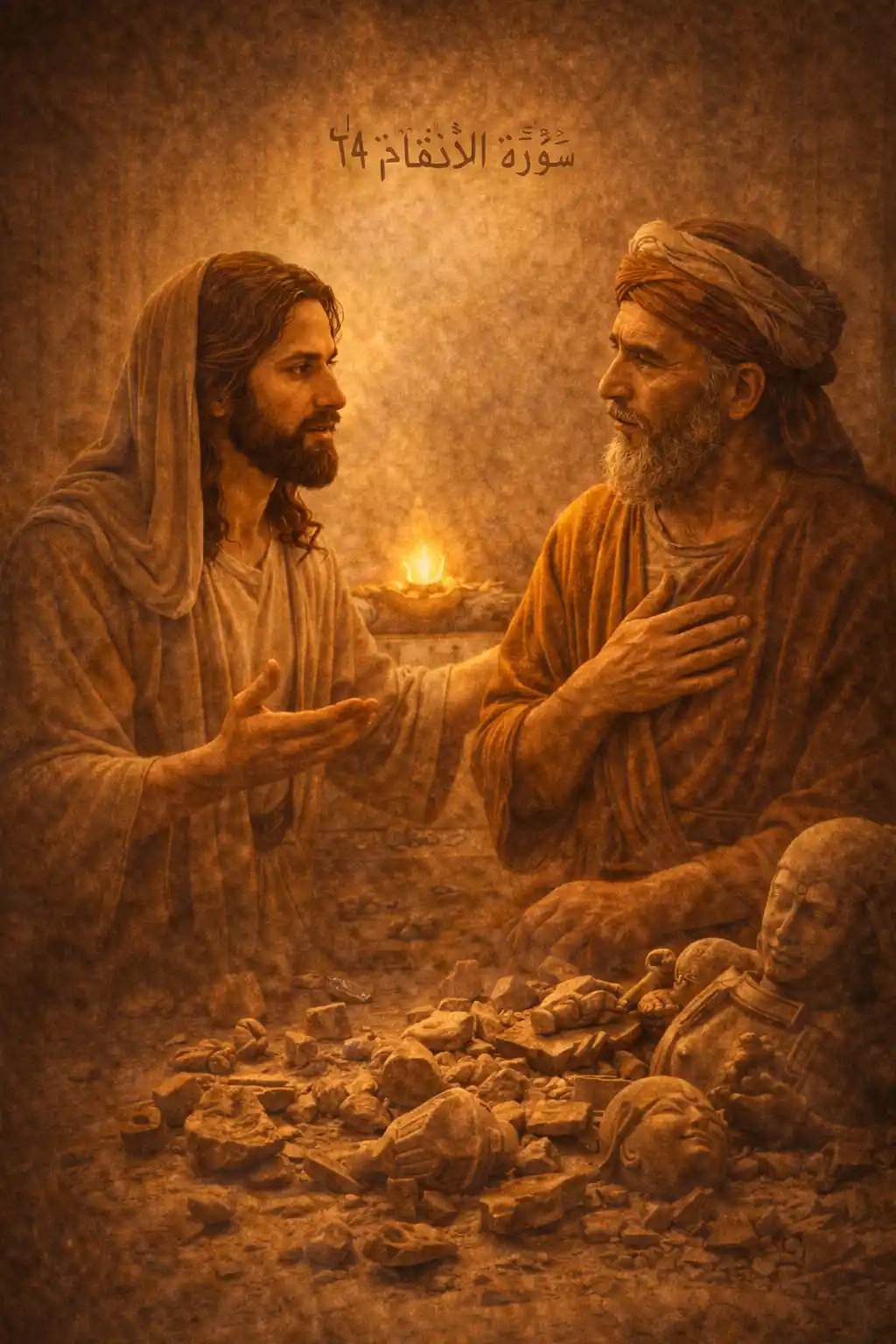
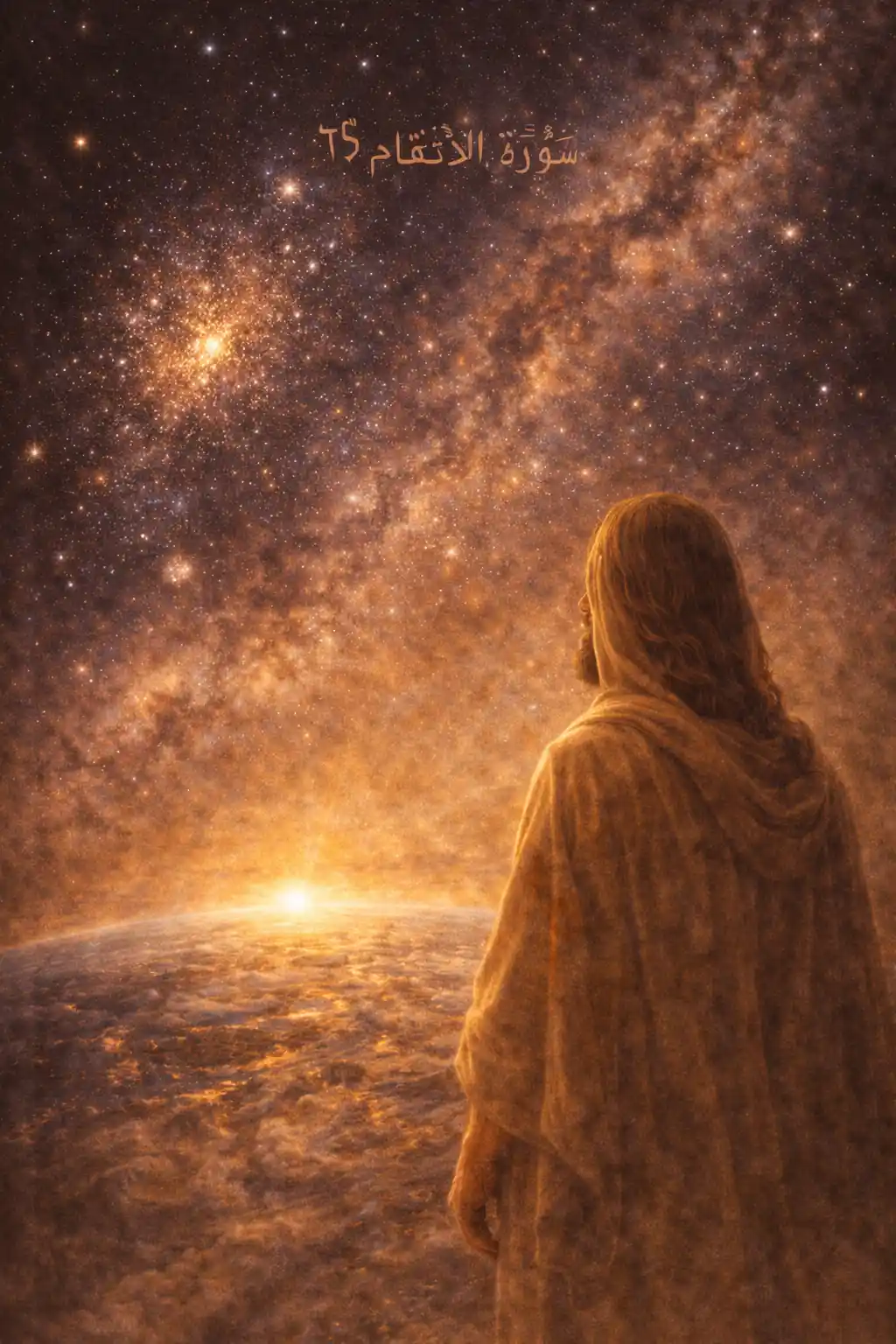
75. And thus did We show Abraham the kingdom of the heavens and the earth that he might be of those who have certainty.
Explanation (6:61–75)
-
6:61–62 – Angels over us and the moment of death:
- Allah is al-Qāhir (Omnipotent) over His slaves and places guardians (angels) over us.
- When death comes, the “messengers” here are the angels of death who take the soul without failing their duty.
- After death, everyone is returned to Allah, the true Lord. The final judgment belongs only to Him, and His reckoning is swift and perfect.
-
6:63–64 – Du‘ā in distress and returning to shirk:
- Allah reminds them of a situation: trapped in the “darkness of land and sea” (like a storm, accident, or disaster) and suddenly they call only on Him, sincerely and secretly.
- They promise that if He saves them, they will be grateful – many people do this instinctively.
- Allah says it is He who saves them from that hardship and “all other distresses” – yet after safety, they go back to associating partners with Him.
When life gets serious, people drop their idols and call only Allah. That proves deep down they know only He has real power. -
6:65 – Types of punishment and internal division:
- Allah can send punishment from above (like storms, stones, bombardment) or from beneath (earthquakes, sinkholes, collapse).
- He can also punish by splitting people into factions and making them taste each other’s violence – civil war, sectarian fighting, mutual oppression.
- Again He says the signs are presented in many forms so that people might understand.
-
6:66–67 – Denial, but the truth stands and has its time:
- The Prophet’s own people deny the Qur’an even though it is the truth.
- He is told: he is not set over them as a controller – his duty is to convey, not to force guidance.
- Every piece of news has an appointed time – when reality arrives, they will see the consequences of their denial.
-
6:68–69 – How to deal with mocking and vain talk about the āyāt:
- When people mock, argue uselessly, or play games with Allah’s verses, the Prophet is commanded to leave that gathering until they move to a different topic.
- If he forgets and sits with them, then remembers, he must not remain with the wrongdoing people.
- Those who truly fear Allah are not accountable for the sins of those mockers – but they must still give the reminder, in case the mockers turn and fear Allah.
This teaches us not to normalise gatherings where Allah’s āyāt are mocked or twisted for entertainment. We give reminder, but we do not sit comfortably in that environment. -
6:70 – Those who take the dīn as a game:
- We are told to leave those who treat their religion as play and amusement and are deceived by worldly life.
- Still, the Qur’an must be used as a reminder so that no soul is destroyed by what it has earned without having been warned.
- Such a person will find no protector or intercessor besides Allah, and no ransom will be accepted.
- They have effectively ruined themselves; their “reward” is boiling water to drink and painful punishment because they chose disbelief.
-
6:71–72 – The image of the misled person and the only true guidance:
- Is it sensible to call on others besides Allah – ones that cannot help or harm – after Allah has guided us?
- Allah gives the example of a person whom devils have lured away, wandering in confusion on earth, while sincere companions call him: “Come to us, to guidance.”
- Real guidance is only Allah’s guidance. We have been commanded:
- to submit to the Lord of the Worlds,
- to establish prayer,
- to have taqwā (fear and consciousness of Him),
- and to remember that to Him alone we will be gathered.
-
6:73 – Creation, the Trumpet, and true ownership:
- Allah created the heavens and the earth “in truth” – with wisdom, purpose, and justice.
- On the Day He says “Be”, it will be – His Word is absolute Truth.
- On the day the Trumpet is blown, the full dominion and obvious kingship will be His.
- He knows the unseen and the seen; He is All-Wise, All-Aware – nothing escapes Him.
-
6:74–75 – Ibrahim begins his confrontation with shirk:
- Ibrahim (Abraham) speaks to his father Azar: taking idols as gods is “manifest error” – it is clearly wrong even by basic reason.
- Allah shows Ibrahim the “kingdom of the heavens and the earth” so that he would be among those with certainty: his faith is built on reflection and seeing the signs of Allah in creation.
- The next verses (which will follow) show how Ibrahim uses the star, moon, and sun as an argument to expose the stupidity of worshipping things that rise and set.
Ibrahim’s method is Qur’anic: he uses reason, observation of the universe, and questions to expose false gods – not blind imitation of ancestors.
76. So when the night covered him over (with darkness), he saw a star. He said: “This is my Lord.” But when it set, he said: “I love not those that set.”
77. Then when he saw the moon rising up, he said: “This is my Lord.” But when it set, he said: “If my Lord does not guide me, I shall surely be among the people who go astray.”
78. Then when he saw the sun rising up, he said: “This is my Lord. This is greater.” But when it set, he said: “O my people, I am indeed free from what you associate others (with Allah).”
79. Indeed, I have turned my face towards Him Who created the heavens and the earth, firmly upright, and I am not of those who associate others (with Allah).”
80. And His people disputed with him. He said: “Do you dispute with me concerning Allah while He has guided me. And I fear not what you associate with Him, except that my Lord wills something. My Lord encompasses all things in knowledge. Will you then not remember.”
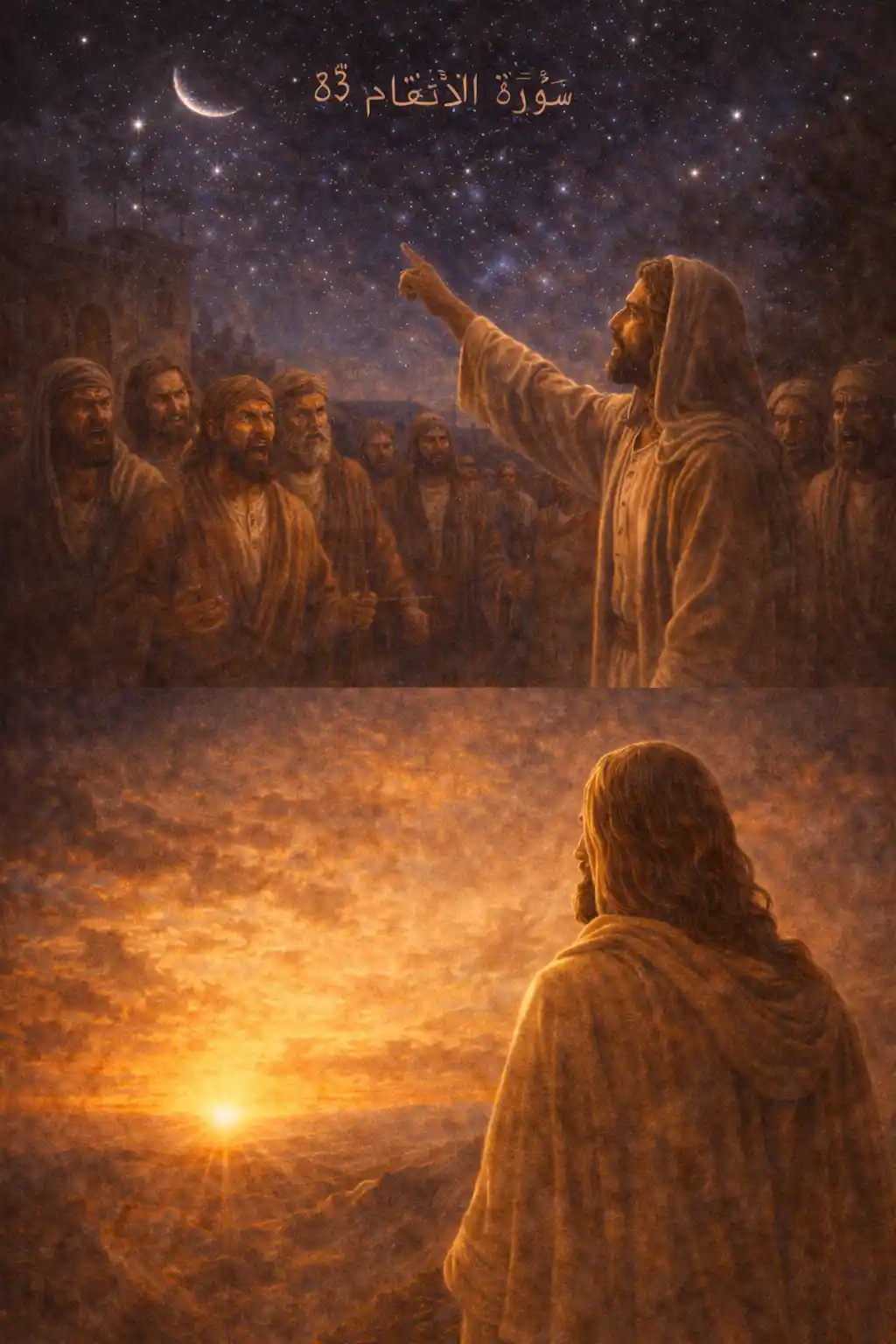
81. And how should I fear that which you associate others (with Allah), and you do not fear that you have associated others with Allah, that for which He has not sent down to you any authority. So which of the two factions has more right to security, if you have knowledge.
82. Those who believe, and obscure not their belief with wrong doing, those are for whom there is security, and they are the guided.
83. And that was Our argument which We gave to Abraham against his people. We raise by degrees whom We will. Certainly, your Lord is All Wise, All Knowing.
84. And We bestowed upon him (Abraham) Isaac and Jacob, all (of them) We guided. And Noah did We guide before, and among his progeny, David and Solomon and Job and Joseph and Moses and Aaron. And thus do We reward those who do good.
85. And Zachariah and John and Jesus and Elias. all (of them) were of the righteous.
86. And Ishmael and Elisha and Jonah and Lot. And all (of them) We preferred above the nations.
87. And (some) among their fathers, and their offsprings, and their brethren. And We chose them, and We guided them to a straight path.
88. Such is the guidance of Allah with which He guides whom He wills of His slaves. And if they had associated others (with Allah), worthless would be to them all that they used to do.
89. Those were the ones whom We gave the Book, and authority, and prophethood. But if these disbelieve in it, then indeed We shall entrust it to a people who are not therein disbelievers.
90. Those were the ones whom Allah guided, so emulate from their guidance. Say: “I ask of you no reward for it. It is not but a reminder for the nations.”
Explanation (6:76–90)
-
6:76 – The star: exposing limited “gods” that disappear:
- Ibrahim observes the star and, in front of his people, says “This is my Lord” as part of an argument, not real belief.
- When the star sets, he concludes: “I love not those that set” – anything that disappears, changes, or is limited cannot be a true Lord.
- This is a logical demolition of worshipping created, changing things.
-
6:77 – The moon: guidance is necessary to avoid going astray:
- He repeats the argument with the moon, which looks bigger and brighter than the star.
- When it sets, he declares that without guidance from his Lord, he would be among those who go astray.
- This shows:
- we cannot rely on mere appearances (brightness, size, “beauty”) in worship,
- true guidance must come from Allah, not from our desires or culture.
-
6:78 – The sun: the final exposure of false gods:
- The sun appears even greater, so he says, “This is my Lord. This is greater,” again as part of the argument.
- When the sun also sets, he turns to his people and clearly disowns their shirk: he is “indeed free” from what they associate with Allah.
- He shows them practically that everything they worship (stars, moon, sun) disappears and is controlled – so none of it can be a true Lord.
-
6:79 – Turning his face purely to the Creator of the heavens and the earth:
- Ibrahim now states his real position: he turns his face to the One who created the heavens and the earth.
- “Firmly upright” (ḥanīfan) means he inclines away from all shirk and towards pure tawḥīd.
- He openly declares that he is not among those who associate others with Allah.
-
6:80–81 – No fear of idols; real fear is of shirk itself:
- His people argue with him, but he answers calmly: “Do you dispute with me concerning Allah while He has guided me?”
- He does not fear their idols at all; the only exception is if his Lord wills some test for him.
- Allah’s knowledge surrounds everything; their idols have no knowledge and no power.
- Ibrahim turns the question back: they are not scared of committing shirk without any authority from Allah, yet they expect him to fear their false gods.
- He asks: which group has more right to feel secure:
- those who worship the Creator alone, or
- those who invent partners without any proof?
-
6:82 – True security and guidance:
- Those who believe and do not mix their belief with “wrongdoing” (ẓulm) are the ones who really have security and are guided.
- Elsewhere the Qur’an clarifies that the greatest “wrongdoing” is shirk – associating others with Allah.
- So real spiritual safety is: īmān without shirk.
-
6:83 – Allah’s argument given to Ibrahim:
- Allah calls this method of reasoning “Our argument” given to Ibrahim against his people.
- It is a rational, clear argument based on:
- observing the universe,
- showing the weakness of created things,
- and directing the mind back to the true Creator.
- Allah raises in rank whom He wills; your Lord is All-Wise and All-Knowing in whom He chooses and how He guides.
-
6:84–87 – The family of prophets on one path:
- Allah lists a chain of prophets granted to Ibrahim and from his descendants: Isaac, Jacob, Noah, David, Solomon, Job, Joseph, Moses, Aaron, Zakariyya, John, Jesus, Elias, Ishmael, Elisha, Jonah, Lot.
- All of them were:
- guided by Allah,
- righteous,
- and preferred above the nations of their time.
- Allah also chose some of their fathers, children and brothers – it is one family of prophethood on one straight path.
-
6:88 – Tawḥīd is the condition of all deeds:
- This guidance from Allah is what He gives to whom He wills among His slaves.
- If even these prophets had done shirk (which they did not), all their deeds would have become worthless.
- This shows that tawḥīd is the foundation: without it, nothing else stands, even for the best of people.
-
6:89–90 – Book, authority, prophethood, and following their guidance:
- These prophets were given:
- the Book (revelation),
- authority (wisdom, judgment, leadership),
- and prophethood.
- If the current people disbelieve in this message, Allah will entrust it to another people who will not disbelieve in it.
- Those are the ones whom Allah guided, so the Prophet is told to follow their guidance – i.e. follow the same tawḥīd, same truthfulness, same justice.
- He is commanded to say he asks no reward from the people; the Qur’an is only a reminder to all nations, not a business or personal gain.
The Qur’an connects all prophets as one team: all on pure tawḥīd, all calling to worship Allah alone, all rejecting shirk, and none of them asking payment. The Prophet ﷺ is told to follow their guidance, and we are told to follow the Qur’an that preserves that same guidance. - These prophets were given:
91. And they did not appraise Allah with a true estimation due to Him, when they said: “Allah has not sent down to a human being anything.” Say: “Who sent down the Book which Moses came with, a light and guidance for mankind, which you have put on parchments, disclosing (some of) it and concealing much. And (by which) you were taught that which you did no know, (neither) you, nor your fathers.” Say: “Allah (sent it down).” Then leave them to play in their vain discussions.
92. And this is a Book (Quran) which We have sent down, blessed, confirming that (which was revealed) before it, so that you may warn the mother of towns (Mecca) and all those around it. And those who believe in the Hereafter believe in it, and they are constant in guarding their prayers.
93. And who can be more unjust than he who invents against Allah a lie, or says: “It has been inspired to me,” while not a thing has been inspired to him, and who says: “I will reveal the like of that which Allah has revealed.” And if you could see, when the wrong doers are in the agonies of death and the angels extend their hands (saying): “Discharge your souls. This day you shall be recompensed with the punishment of humiliation because of what you used to say against Allah other than the truth. And you were, towards His verses, being arrogant.”
94. And certainly you have come to Us alone as We created you the first time, and you have left behind you, all that We had bestowed on you. And We do not see with you your intercessors, whom you claimed that they were among you partners (with Allah). Indeed, it has all been cut off between you, and lost from you is all that you used to claim.
95. Truly (it is) Allah Who splits the seed grain and the fruit kernel (for sprouting). He brings forth the living from the dead, and it is He Who brings forth the dead from the living. Such is Allah, then how are you deluded away.
96. (He is) the Cleaver of the daybreak, and He has appointed the night for resting, and the sun and the moon for reckoning. Such is the measuring of the All Mighty, the All Knowing.
97. And it is He Who has placed for you the stars that you may be guided by them through the darkness of the land and the sea. Indeed, We have explained in detail the signs for a people who have knowledge.
98. And it is He Who has created you from a single soul, and (has given you) a place of residing and a repository. Indeed, We have explained in detail the signs for a people who have understanding.
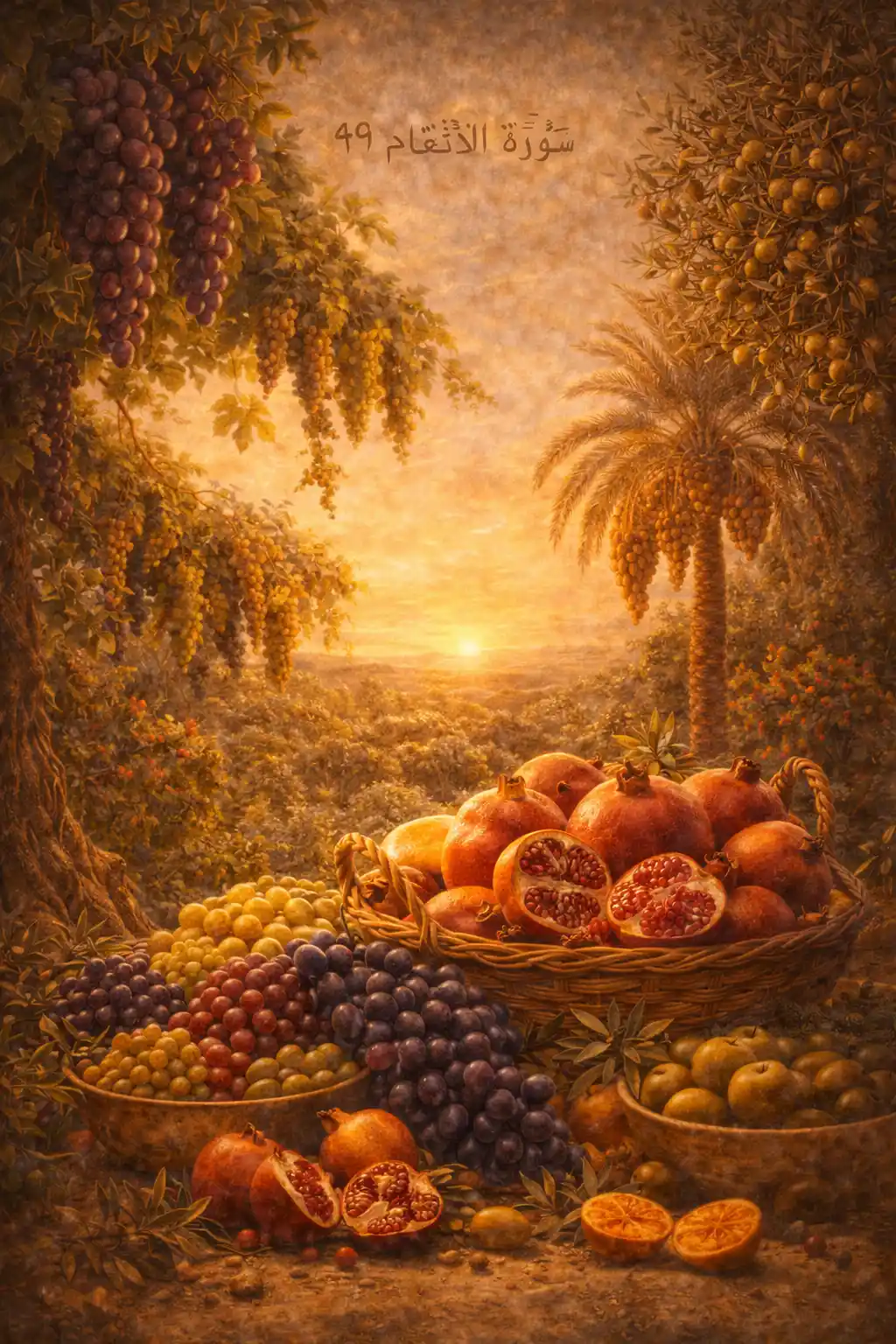
99. And it is He Who sends down water from the sky, then We produce with it vegetation of all kinds, then We bring forth from it the green (crops), out of which We bring forth the thick clustered grain. And out of the palm tree from the sheath of it, (We bring out) thick clustered dates hanging low, and (We produce) gardens of grapesvines, and the olive and the pomegranate, resembling and yet different (in variety and taste). Look at their fruit, when they (trees) begin to bear fruit, and its ripening. Indeed, in that are signs for a people who believe.
100. And yet they associate jinns, as partners with Allah, though He has created them, and they impute to Him sons and daughters without knowledge. Glorified be He and High Exalted above what they attribute (to Him).
101. (He is) the Originator of the heavens and the earth. How can He have a son, and (when) there is for Him no companion. And He created all things, and He is the All Knower of all things.
102. Such is Allah, your Lord. There is no god except Him, the Creator of all things, so worship Him. And He is the guardian over all things.
103. Vision comprehends Him not, but He comprehends (all) vision. And He is the Most Subtle, the All Aware.
104. Indeed, there has come to you insights from your Lord. So whoever sees, it is for (the good of) his own self. And whoever is blind, it is to his own (harm). And I (Muhammad) am not a guardian over you.
105. And thus do We explain the verses in diverse ways, so that they (the disbelievers) might say (to you, Muhammad): “You have studied (from somebody),” and that We may make it clear for the people who have knowledge.
106. Follow that which has been inspired to you from your Lord. There is no god except Him. And turn away from those who associate others (with Allah).
107. And if Allah had willed, they would not have associated others (with Allah). And We have not made you over them a watcher, nor are you a guardian over them.
108. And insult not those whom they (disbelievers) call upon besides Allah, lest they insult Allah in enmity without knowledge. Thus We have made fair seeming to each people their deed. Then to their Lord is their return, then He will inform them what they used to do.
109. And they swear by Allah their strongest oaths that if there came to them a sign, they would surely believe in it. Say: “The signs are only with Allah, and what will make you perceive that (even) if it (the sign) came, they would not believe.”
110. And We shall turn away their hearts and their eyes (from guidance), as they believed not therein for the first time, and We shall leave them in their trespass wandering blindly.
Explanation (6:91–110)
-
6:91 – Underestimating Allah and hiding parts of previous revelation:
- They claim “Allah has not sent down to a human being anything,” which is effectively denying all revelation.
- Allah answers: who sent down the Book given to Musa, a light and guidance?
- They put that scripture on parchments, show some of it and hide much of it, and they were taught by it knowledge they and their fathers didn’t know.
- The command is: say “Allah (sent it down),” then leave them in their vain talk. If they play with revelation, they only harm themselves.
-
6:92 – The Qur’an: blessed, confirming, and warning:
- The Qur’an is:
- a blessed Book,
- confirming what was revealed before it,
- and sent so the “mother of towns” (Makkah) and those around it can be warned.
- Those who truly believe in the Hereafter:
- believe in the Qur’an,
- and guard their prayers consistently.
- The Qur’an is:
-
6:93 – The worst type of injustice: lying about revelation:
- The most unjust is:
- the one who invents a lie against Allah,
- claims “It has been inspired to me” when no inspiration came,
- or says “I will reveal something like what Allah revealed.”
- Their end at death is humiliation: the angels say “Discharge your souls” and remind them that the punishment is because of their lies about Allah and arrogance against His verses.
- This is a direct warning against anyone who fabricates religious speech and attributes it to Allah.
- The most unjust is:
-
6:94 – Alone before Allah; no intercessors:
- Humans return to Allah alone, as they were first created.
- Everything given in the world is left behind.
- The intercessors they used to claim as “partners” with Allah are nowhere to be found.
- All the false connections are cut off; everything they claimed is lost.
-
6:95–99 – Signs in seeds, daybreak, stars, life, water, and fruits:
- Allah splits the seed and kernel, brings life from death and death from life – He is the cause behind every “natural” process.
- He splits the daybreak, made night for rest and sun/moon as tools for measurement of time.
- He placed stars as a means of guidance in land and sea.
- He created humans from a single soul, gave them places of residence and storage.
- He sends water, brings out all kinds of crops, clustered grain, dates, grapes, olives, pomegranates – similar in shape yet different in taste and quality.
- We are told to look at the fruits as they grow and ripen – this is an invitation to reflect on His power, wisdom, and perfect design.
-
6:100–103 – Allah’s absolute uniqueness and transcendence:
- Despite all these signs, some people still attribute partners to Allah from the jinn, and even claim He has sons and daughters – all without knowledge.
- Allah is glorified and far above what they ascribe.
- He is the Originator of the heavens and earth; He has no companion, yet people claim He has a son.
- He created everything and knows everything; He is:
- the only true God,
- the Creator and Guardian of all things,
- beyond our vision, while He fully comprehends all vision.
- He is the Most Subtle (aware of the finest details) and the All Aware (nothing escapes His knowledge).
-
6:104–105 – Insights for those who want to see:
- The Qur’an brings “insights” (baṣā’ir) from the Lord: whoever benefits from them does so for himself; whoever is blind harms only himself.
- The messenger is not a controller over them; his job is to convey.
- The verses are explained in multiple ways:
- so that some will accuse the Prophet of “studying from someone”,
- but also so that the people of knowledge can see clearly that this is divine revelation.
-
6:106–107 – Follow revelation, not the people, and accept that shirk exists by Allah’s will:
- The command is simple: follow what has been revealed from your Lord.
- There is no god except Him, so turn away from those who do shirk; your duty is to follow revelation, not to force them.
- If Allah had willed, they would not have done shirk; this shows that forced belief is not the method – guidance is by Allah’s will and their response.
- The messenger is not set as a watcher or guardian over them; he delivers the message.
-
6:108 – Don’t insult their false gods to avoid them insulting Allah:
- Believers are commanded not to insult what the disbelievers call on besides Allah.
- If we insult their false objects of worship, they may respond by insulting Allah out of ignorance and hatred.
- This is a principle: even when we reject falsehood clearly, we must avoid actions that cause greater disrespect to Allah.
- Each people have had their deeds made to appear attractive to them; in the end, everyone returns to their Lord and He informs them of what they did.
-
6:109–110 – Demanding signs, but still refusing to believe:
- They swear their strongest oaths that if a sign came, they would believe.
- Allah tells the Prophet to answer that signs are only with Allah – and even if the sign came, they still would not believe.
- Because they rejected when guidance first came, their hearts and eyes are turned away, and they are left wandering blindly in their rebellion.
- This is a warning: repeatedly rejecting clear guidance can close a person’s heart such that even more signs no longer benefit them.
111. And even if We had sent down to them the angels, and the dead had spoken to them, and We had gathered all things before them, they would not have believed unless Allah so willed, but most of them are ignorant.
112. And thus We have appointed for every prophet an enemy, devils from mankind and jinn, inspiring some of them to others with adorned speech as a delusion. And if your Lord had so willed, they would not have done it, so leave them alone, and that which they invent.
113. And that may incline to it (deceptive speech), the hearts of those who do not believe in the Hereafter, and that they may be well pleased with it, and that they acquire whatever they may be acquiring.
114. (Say O Muhammad) “Then is it other than Allah I shall seek as judge, and it is He Who has sent down to you the Book (Quran), explained in detail.” And those to whom We gave the Book (aforetime) know that it is revealed from your Lord in truth. So be not you of those who doubt.
115. And the Word of your Lord has been fulfilled in truth and justice. None can change His Words. And He is the All Hearer, the All Knower.
116. And if you obey most of those on the earth, they will mislead you from Allah's way. They do not follow except conjectures, and they do not but falsify.
117. Indeed, your Lord, it is He Who knows best who strays from His Way, and He knows best those who are guided.
118. So eat of that on which Allah's name has been mentioned, if you are believers in His revelations.
119. And why should you not eat of that on which Allah's name has been mentioned, while He has explained in detail to you that which is forbidden to you, except that to which you are compelled. And indeed, many do lead (others) astray by their own desires without knowledge. Certainly, your Lord, He knows best of the transgressors.
120. And leave the apparent of sin and the concealed thereof. Indeed, those who earn sin will be recompensed for that which they used to commit.
121. And do not eat of that on which Allah's name has not been mentioned, for sure it is abomination. And indeed, the devils do inspire their friends to dispute with you. And if you obey them, you would indeed be those who associate others (with Allah).
122. And is he who was dead, then We gave him life, and made for him a light by which he can walk among the people, like him whose similitude is in darkness, from which he can never come out. Thus it is made fair seeming to the disbelievers that which they used to do.
123. And thus We have placed in every town the greatest of its criminals to conspire therein. And they do not conspire except against their own selves, and they perceive it not.
124. And when there comes to them a sign (from Allah), they say: “We shall not believe until we are given the like of that which was given to Allah's messengers.” Allah knows best with whom to place His message. There will afflict those who committed crimes, humiliation from Allah and severe punishment, for that which they used to conspire.
125. So whomsoever Allah wills to guide, He expands his breast to Islam. And whomsoever He wills to send astray, He makes his breast tight, constricted, as though he were climbing up to the sky. Thus Allah puts ignominy upon those who believe not.
126. And this is the path of your Lord, leading straight. We have indeed detailed the revelations for a people who heed to admonition.
127. For them will be the abode of peace with their Lord. And He will be their protecting friend because of what they used to do.
128. And on the day when He will gather them together (and say): “O assembly of the jinns, you have indeed (mislead) many of mankind.” And their friends among mankind will say: “Our Lord, we did benefit, some of us from the others, and now we have reached our appointed term which You did appoint for us.” He will say: “The Fire is your dwelling place, you will dwell therein for ever, except as Allah wills. Certainly, your Lord is All Wise, All Knowing.”
129. And thus We shall make the wrong doers friends of one another, because of that which they used to earn.
130. “O you assembly of the jinns and the mankind, did not there come to you messengers from amongst you, reciting to you My verses, and warning you of the meeting of this Day of yours.” They will say: “We bear witness against ourselves.” And the life of the world deceived them. And they will bear witness against themselves that they were disbelievers.
Explanation (6:111–130)
-
6:111 – Refusing belief even with overwhelming signs:
- Even if angels came down, the dead spoke, and everything was gathered in front of them, they would still not believe unless Allah willed.
- This shows their problem is not lack of evidence, but a hardened heart and stubbornness.
-
6:112–113 – Enemies of prophets and “decorated” false speech:
- Every prophet was given enemies from both humans and jinn:
- devils among mankind and jinn,
- who inspire each other with beautiful-sounding, deceptive speech.
- If Allah had willed, they would not have done this – meaning Allah allows it as a test.
- Such speech attracts the hearts of those who do not believe in the Hereafter: they like it, feel pleased with it, and keep acquiring more evil through it.
- Every prophet was given enemies from both humans and jinn:
-
6:114–115 – Allah alone is the Judge and source of the detailed Book:
- The Prophet is told to say: should anyone be taken as judge besides Allah, when it is Allah who sent down the detailed Qur’an?
- Those given previous scripture know this Qur’an is truly from Allah.
- Allah’s Word is completed in:
- truth (no falsehood), and
- justice (no injustice).
- No one can change His Words; He hears and knows everything.
-
6:116–119 – Do not follow the majority when they follow conjecture:
- If you follow most people on earth, they will mislead you from Allah’s way.
- The majority often:
- follow guesswork and culture,
- and speak lies without real knowledge.
- Allah alone knows best who is truly astray and who is guided.
- Eating from what Allah’s name has been mentioned upon is allowed; He has already detailed what is forbidden, except when you are genuinely compelled.
- Many still mislead others by desires, without knowledge – Allah knows best the transgressors.
-
6:120–121 – Leave all sin and avoid food of shirk:
- Leave sin both:
- open (visible), and
- hidden (secret, in the heart or private).
- Those who earn sin will be repaid for what they used to do.
- Do not eat from what Allah’s name was not mentioned upon – it is filth and linked to shirk practices.
- Devils whisper to their friends to argue with believers; if you obey them, you become from the people of shirk.
- Leave sin both:
-
6:122–123 – The living with light versus the one stuck in darkness:
- Example:
- One person was “dead” (spiritually), Allah gave him life and a light to walk with among people.
- Another is in deep darkness, unable ever to come out.
- This is a parable of:
- the believer guided by Qur’an, versus
- the disbeliever stuck in misguidance.
- In every town, the biggest criminals are usually the ones plotting, but their plots only return upon themselves and they do not realize it.
- Example:
-
6:124 – Arrogance and demanding equal “special status”:
- When a sign comes, they say: “We will not believe until we are given what the messengers were given.”
- This is envy and arrogance — they want prophet-level status or miracles on demand.
- Allah knows best where to place His message.
- The criminals will face:
- humiliation from Allah, and
- severe punishment,
-
6:125–126 – Expanded chest for Islam versus tightness of misguidance:
- Whoever Allah wants to guide:
- He expands his chest for Islam – Islam feels natural, open, and spacious.
- Whoever Allah wills to misguide:
- His chest becomes tight and constricted,
- as if he is climbing into the sky, struggling to breathe.
- This is how Allah places disgrace upon those who refuse to believe.
- The path of the Lord is straight, and the verses are detailed for those who accept reminders.
- Whoever Allah wants to guide:
-
6:127 – The abode of peace:
- For the believers who accepted guidance:
- there is “Dār al-Salām” – the abode of peace (Paradise),
- and Allah Himself is their protecting friend because of what they used to do.
- For the believers who accepted guidance:
-
6:128–130 – Jinn and humans admitting the truth on the Day of Judgment:
- On that Day, Allah addresses the jinn: they misled many humans.
- Human companions of the jinn admit: they benefited from each other in the world, and have now reached the appointed term.
- The verdict:
- The Fire is their home, forever, except as Allah wills.
- Allah is All Wise, All Knowing.
- Wrongdoers are made friends/allies of each other because of what they earned – misguidance attracts similar company.
- Allah reminds both jinn and humans: messengers came from among them, reciting His verses and warning of this very Day.
- They confess against themselves: dunya life deceived them, and they admit they were disbelievers.
131. This is because your Lord destroys not the townships unjustly while their people were unaware, (so the messengers were sent).
132. And for all, there will be ranks according to what they did. And your Lord is not unaware of what they do.
133. And your Lord is self sufficient, the possessor of mercy. If He wills, He could take you away and cause to succeed after you whom He wills, even as He raised you up from the posterity of other people.
134. Indeed, that which you are promised will surely come to pass, and you cannot escape.
135. Say (O Muhammad): “O my people, work according to your way. Surely, I too am working. Then soon you will know who it is whose end will be (best) in the Hereafter. Certainly the wrong doers will not prosper.”
136. And they assign to Allah, from that which He created, of the crops and the cattle, a portion. Then they say: “This is for Allah,” by their claim, “And this is for our (Allah's so called) partners.” Then that which was to their partners reaches not to Allah. And that which was to Allah, so that goes to their (Allah's so called) partners. Evil is what they decide.
137. And thus to many of the idolaters, their (Allah's so called) partners have made fair seeming the killing of their children, that they may ruin them, and make their faith obscure for them. And if Allah had willed, they would not have done so. So leave them alone and what they fabricate.
138. And they say: “These cattle and crops are forbidden. No one can eat of them except whom we will,” by their claim, and (certain) cattle whose backs are forbidden (for burden), and the cattle on which (at slaughtering) they do not mention the name of Allah. (All that is) lying against Him. He will recompense them for what they used to fabricate.
139. And they say: “That which is in the bellies of these cattle is exclusively for our males and is forbidden to our females. And if it is (born) dead, then they all may share in it.” He will soon recompense them for their (false) attribution. Verily, He is All Wise, All Knower.
140. Indeed, lost are those who have killed their children in foolishness without knowledge, and have forbidden that which Allah bestowed upon them, inventing a lie against Allah. They indeed have gone astray and are not guided.
141. And it is He Who produces gardens trellised and untrellised, and the date palms, and crops of divers flavor, and the olive, and the pomegranate, resembling and yet different (in variety and taste). Eat of their fruit when they bear fruits, and pay its due on the day of its harvest, and waste not by excess. Indeed, He loves not those who are extravagant.
142. And of the cattle are carriers (for burdens), and for slaughter. Eat of that which Allah has bestowed upon you, and follow not the footsteps of the devil. Surely, he is an open enemy to you.
143. Eight pairs. Of the sheep twain (male and female), and of the goats twain (male and female). Say: “Is it the two males He has forbidden or the two females, or that which the wombs of the two females contain. Inform me with knowledge if you are truthful.”
144. And of the camels twain (male and female), and of the oxen twain (male and female). Say: “Is it the two males He has forbidden or the two females, or that which the wombs of the two females contain. Or were you present to witness when Allah commanded you this.” Then who does greater wrong than he who invents a lie against Allah, that he may lead mankind astray without knowledge. Certainly, Allah guides not the wrongdoing people.
145. Say (O Muhammad): “I find not in that which is revealed to me anything forbidden to an eater that he eats it, except that it be carrion, or blood poured forth, or swineflesh, for that indeed is unclean, or the abomination which was immolated to other than Allah. Then whosoever is forced by necessity, without disobedience nor exceeding, then certainly your Lord is Oft Forgiving, Most Merciful.”
146. And unto those who are Jews, We forbade all (animals) with claws. And of the oxen and the sheep, We forbade to them their fat, except what adheres to their backs, or the entrails, or that which is mixed with the bone. Thus We recompensed them for their rebellion. And indeed, We verily are truthful.
147. So if they deny you (O Muhammad), then say: “Your Lord is the Owner of vast mercy, and never will His wrath be turned back from the people who are criminals.”
148. Those who associate others (with Allah) will say: “If Allah had willed, we would not have associated others (with Allah), nor our fathers, and we would not have forbidden anything (against His will).” Thus did deny those who were before them, until they tasted Our wrath. Say: “Do you have any knowledge that you can produce before us. You follow not except conjecture, and you do nothing except guessing.”
149. Say: “Then for Allah is the conclusive argument. So if He had so willed, He would indeed have guided you all.”
150. Say (O Muhammad): “Bring forward your witnesses, who can bear witness that Allah has forbidden this. Then if they bear witness, so you do not bear witness with them. And do not follow the desires of those who deny Our revelations, and those who do not believe in the Hereafter, and they deem (others) as equal with their Lord.
151. Say (O Muhammad): Come, I will recite that which your Lord has forbidden to you. That you associate not anything with Him, and be good to parents, and do not kill your children because of poverty. We provide sustenance for you and for them. And you come not near to lewd things, what is apparent of them and what is concealed. And do not kill the soul which Allah has forbidden, except in the course of justice. This He has commanded you, that you may understand.”
152. “And come not near to the wealth of the orphan except with that which is better, until he reaches (the age of) his full strength. And give full measure and weight with justice. We burden not any soul beyond its capacity. And when you speak, do justice, even if it be (against) a near relative. And fulfill the covenant of Allah. This He has commanded you, that you may remember.”
153. And verily, this is My path, leading straight, so follow it. And follow not (other) ways, that would separate you from His way. This He has commanded you, that you may fear (Allah).
154. Then We gave Moses the Book, making complete (Our favor) upon him who would do good, and an explanation of all things, and a guidance and a mercy, that they might believe in the meeting with their Lord.
155. And this (Quran) is a Book which We have revealed as a blessing, so follow it and fear (Allah), that you may receive mercy.
156. Lest you should say: “The Book was only sent down to two groups before us, and that we were indeed unaware of what they studied.”
157. Or lest you should say: “If only the Book had been sent down to us, we would surely have been better guided than they.” So indeed, now there has come to you a clear evidence from your Lord, a guidance and a mercy. So who does greater wrong than he who denies the revelations of Allah, and turns away from them. We shall soon recompense those who turn away from Our revelations with an evil torment, because of their having turned away.
158. Do they (then) wait (for anything) except that the angels should come to them, or your Lord should come, or there should come some of the signs of your Lord. The day when some of the signs from your Lord will come, no benefit will it do (then) to a soul to believe in them, if he believed not before, or earned through his faith any good. Say: “Wait you, we too indeed are waiting.”
159. Indeed, those who have divided their religion, and become sects, you are not with them in anything. Their affair is only with Allah, then He will inform them of what they used to do.
160. Whoever comes with a good deed, for him is ten times the like thereof (to his credit). And whoever comes with an evil deed, will not be recompensed except the like thereof, and they will not be wronged.
161. Say (O Muhammad): “Indeed, my Lord has guided me to a straight path, a right religion, the way of Abraham, the true in faith. And he was not among those who associated others (with Allah).”
162. Say: “Indeed, my prayer, and my sacrifice, and my living, and my dying are for Allah, the Lord of the worlds.”
163. “He has no partner. And of this I have been commanded, and I am the first of those who surrender (to Him).”
164. Say: “Is it other than Allah shall I seek as a Lord, and He is the Lord of all things. And each soul earns not except against itself. And no bearer of burdens will bear the burden of others. Then to your Lord is your return, and He will indeed inform you of that wherein you used to differ.
165. And it is He Who has appointed you vicegerent of the earth, and has exalted some of you above others in ranks, that He may try you through that which He has given you. Indeed, your Lord is swift in retribution, and indeed, He is Oft Forgiving, Most Merciful.
Explanation (6:131–165)
-
6:131–134 – No destruction without warning, and the certainty of the promise:
- Allah does not destroy towns unjustly while their people are unaware. Messengers are sent first so that proof is completed.
- Everyone will have ranks according to what they did; nothing is hidden from Allah.
- Allah is rich and independent, yet merciful. He can replace a nation with others, just as He raised this ummah from previous nations.
- What Allah promised – the Day of Resurrection and judgment – is absolutely certain. No one can escape it.
-
6:135 – Challenge to work and wait for the final outcome:
- The Prophet is told to say to his people:
- “Work according to your way; I am also working.”
- In the Hereafter, it will become clear whose outcome is best.
- Oppressors and wrongdoers will not prosper in the end.
- The Prophet is told to say to his people:
-
6:136–140 – Corrupted rituals, man-made taboos, and killing children:
- They split their crops and cattle: “This is for Allah” and “this is for our partners,” but what is for the partners never actually reaches Allah, and what is for Allah they redirect to their idols. A twisted logic.
- Their so-called “partners” made killing their own children seem beautiful:
- This ruined them,
- and confused their religion.
- They invented haram categories of cattle, and rules about who can eat what, and when Allah's name is mentioned – all lies against Allah.
- Those who kill their children out of ignorance and forbid what Allah allowed are truly misguided and not on guidance at all.
-
6:141–142 – Blessings of plants and cattle, and the command not to waste:
- Allah produced:
- trellised and untrellised gardens,
- date palms, varied crops, olives, pomegranates.
- We are told:
- Eat their fruits when they ripen.
- Give the due (zakāh/charity) on the day of harvest.
- Do not waste – Allah does not love the extravagant.
- Cattle are for riding and carrying loads, and also for food. We must eat what Allah has permitted and avoid following Shayṭān, who is a clear enemy.
- Allah produced:
-
6:143–144 – Exposing baseless religious rules:
- Allah mentions four pairs (sheep, goats, camels, oxen – male and female) and
asks them to specify:
- Which exact sex did Allah forbid?
- Or is it what’s inside the womb?
- Were you present when Allah gave such a command?
- They have no revelation or knowledge—just lies invented about Allah.
- Such lies are used to mislead people without knowledge; Allah does not guide such wrongdoers.
- Allah mentions four pairs (sheep, goats, camels, oxen – male and female) and
asks them to specify:
-
6:145–147 – The real forbidden foods and the case of the Jews:
- The Prophet is told to list what is truly forbidden:
- carrion (dead meat),
- flowing blood,
- swine flesh,
- anything dedicated to other than Allah.
- In cases of necessity, without rebellion or excess, Allah is Forgiving and Merciful.
- For the Jews, extra prohibitions were given (animals with claws, certain fats) as a punishment for rebellion.
- If they still deny the Prophet, he is to say: Allah has vast mercy but His punishment will not be turned back from criminal people.
- The Prophet is told to list what is truly forbidden:
-
6:148–149 – False excuses of shirk and Allah’s decisive argument:
- Those who commit shirk claim:
- “If Allah had willed, we and our fathers would not have done shirk, or forbidden anything.”
- This is an excuse to hide behind qadar (destiny) while ignoring that Allah already forbade their actions.
- Previous nations used the same excuse until punishment came.
- They have no knowledge, only conjecture and guesswork.
- Say: Allah has the final, conclusive argument. If He had so willed, He could have guided all, but He chose to test us with free will.
- Those who commit shirk claim:
-
6:150–153 – The clear list of prohibitions and the straight path:
- Allah challenges them to bring real witnesses that Allah made certain things haram. Even if they bring such “witnesses,” the Prophet must not agree with them.
- We are told not to follow those:
- who deny Allah’s verses,
- who do not believe in the Hereafter,
- and who equate others with their Lord.
- Allah then lists what He has truly forbidden:
- No shirk with Him.
- Kindness to parents.
- Do not kill children due to poverty; Allah provides for all.
- Avoid all shameful deeds, outward and inward.
- Do not kill any soul Allah has made sacred, except with justice.
- Do not approach the property of the orphan except to improve it, until maturity.
- Give full measure and weight with justice.
- Speak justly, even against close relatives.
- Fulfil Allah’s covenant.
- This is His clear, straight path; other paths will split you away from His way.
-
6:154–157 – Torah and Qur’an as guidance, and removing excuses:
- Mūsā (Moses) was given the Book (Torah) as:
- completion of favor,
- detailed explanation,
- guidance and mercy, so that they believe in meeting their Lord.
- The Qur’an is likewise a blessed Book to be followed and feared (with taqwā), so mercy can be given.
- Excuses are removed:
- We can’t say: “The Book was only sent to people before us and we were unaware.”
- We can’t say: “If it was sent to us, we’d be better guided.”
- Now that the Qur’an has come as clear evidence, guidance and mercy, whoever turns away from it will face a painful punishment.
- Mūsā (Moses) was given the Book (Torah) as:
-
6:158 – Last chances and when repentance no longer helps:
- Are they waiting for:
- angels to come,
- or Allah’s coming,
- or some of His great signs?
- When certain signs appear, belief will not benefit the one who:
- did not believe before,
- or did not earn good deeds with his faith.
- The Prophet is told: “Wait; we are also waiting.” Meaning: the time of decisive outcome is coming.
- Are they waiting for:
-
6:159–160 – Condemning sects and multiplying the reward:
- Those who split their religion into sects – the Prophet has nothing to do with them. Their case is with Allah alone.
- The principle of reward and punishment:
- One good deed = ten times its like.
- One evil deed = only its equal.
- No one is wronged by Allah.
-
6:161–165 – The straight path of Abraham and total devotion to Allah:
- The Prophet declares:
- His Lord has guided him to the straight path,
- the upright religion of Ibrāhīm (Abraham), who was pure in faith, without shirk.
- He states that:
- his prayer,
- his sacrifice,
- his living,
- and his dying are all for Allah, Lord of the worlds, with no partner.
- Each soul is responsible only for what it has earned. No one carries another’s burden.
- All will return to Allah; He will judge all disputes.
- Allah made humans successors (khulafā’) on earth, raising some above others in rank as a test.
- He is:
- swift in punishment when people persist in evil, and
- Oft-Forgiving, Most Merciful for those who repent and obey.
- The Prophet declares: